safety
Living at Home With Dementia: Help Without Surveillance
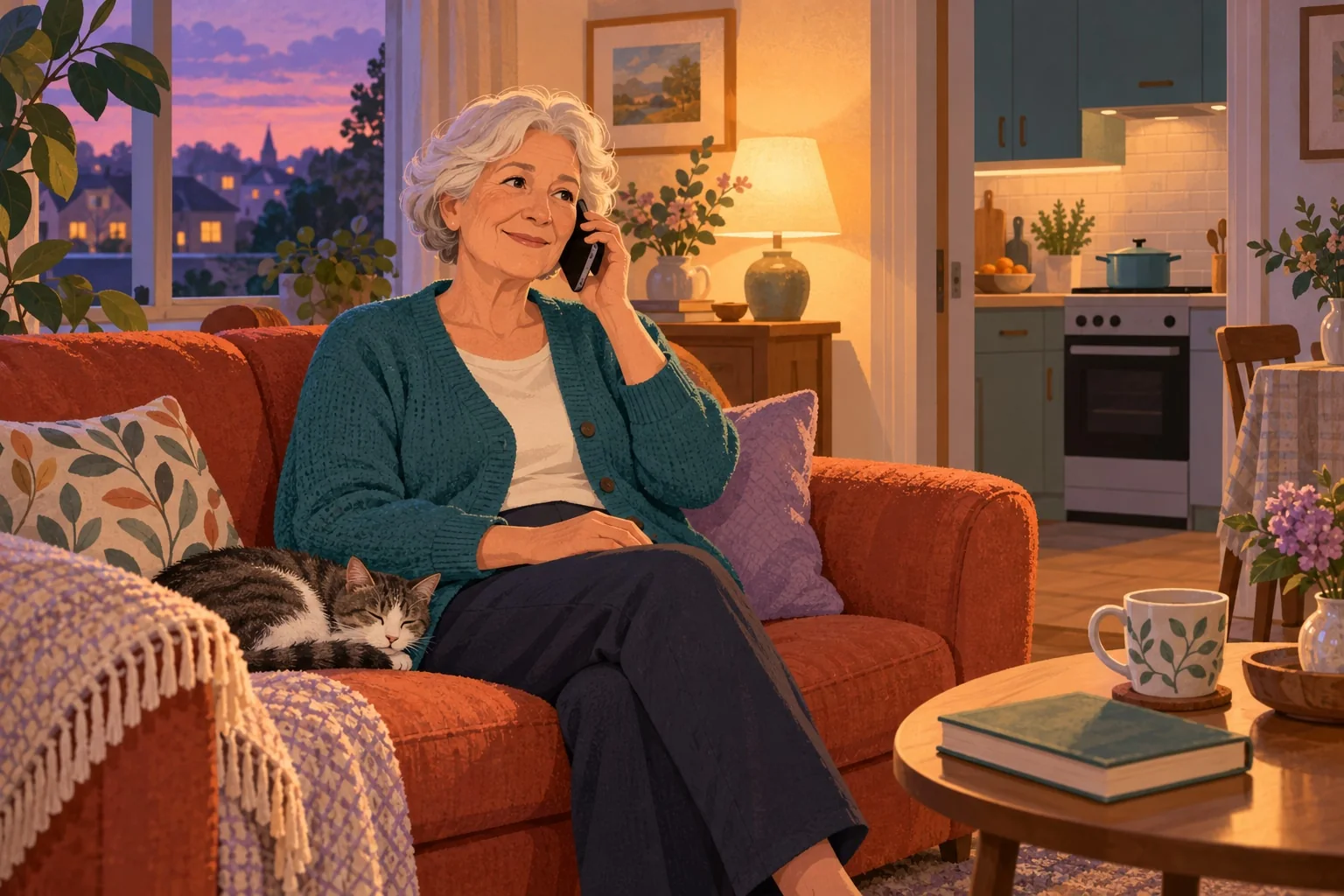
· KoniEvery evening at seven, the daughter calls. "Did you eat? Is the stove off? Did you lock the door?" Her mother answers patiently, then less patiently. She doesn't like being checked on. Her daughter doesn't like having to check. Both of them would rather just talk.
Many families in Switzerland know this call.
Most people with dementia live at home
According to the Federal Office of Public Health (BAG), around 166,300 people in Switzerland live with dementia, and about 35,800 are newly diagnosed each year. By far the largest share of them live at home, supported by partners, children, neighbours and Spitex.
Living at home for as long as possible is what most people want. It also means that the people around them carry a lot of worry: the stove, the night, the front door, a fall that nobody notices.
Where a home can quietly help
In the early stage of dementia, a few well-chosen helpers can take some of that worry away, without changing how the home looks or feels.
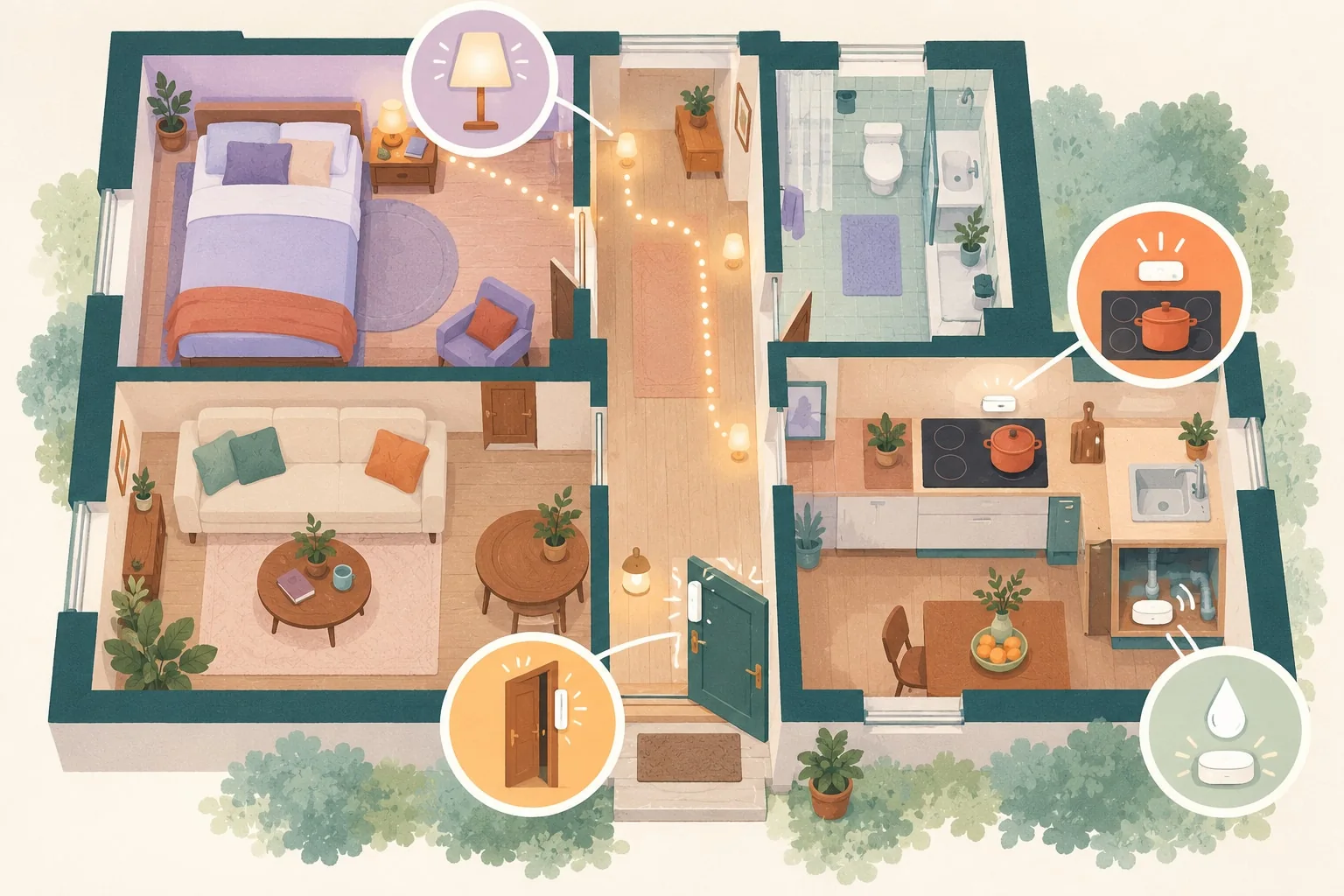
- A stove guard. A small device fitted to an electric stove by an electrician. It notices overheating, smoke or a pot left on for too long, and switches the stove off with a warning tone. It's meant for the early stage, when cooking is still part of daily life.
- Soft light at night. Motion sensors switch on a gentle light on the way to the bathroom, so nobody has to search for a switch in the dark. I wrote about this in Darker Evenings, Safer Hallways.
- The front door at night. If the door opens between midnight and six, the hallway light comes on and a family member gets a short message. Nobody is locked in, and nobody is woken for nothing during the day.
- Water. A leak sensor under the sink and the washing machine notices a running tap or an overflowing basin early.
- A quiet daily sign of life. If there's been no movement in the flat by mid-morning, the daughter gets a message. On every other day she knows, without asking, that the morning has started as usual. The evening call can go back to being a conversation.
For emergencies, use what's built for emergencies
Konihaus™ is not an emergency service, and a smart home shouldn't pretend to be one. If someone needs to reach help at any time, Switzerland has monitored emergency call services, for example from the Swiss Red Cross, with a control centre that answers around the clock. A smart home can complement them, never replace them.
The hard part isn't the technology
The real question is a different one: how much watching over is help, and from when is it control?
A sensor that reports "no movement by ten" is very different from a camera in the living room. A message when the door opens at three in the morning is very different from tracking every step. People with dementia are adults who have the right to decide about their own home for as long as they can.
That's why I follow a few rules:
- Talk early, and with the person concerned. The best time to decide what the home should do is while the person can still decide themselves. Their wishes come first, not only the family's worries.
- As little as possible, as much as necessary. One clear signal is better than ten reports. Nobody needs to know when someone went to the toilet.
- No cameras inside the home. What's described here works without them.
- The data stays in the home. Everything runs locally, nothing goes to a cloud. More on this in Your Home, Your Data.
- Look again regularly. Dementia changes over time, and so do needs. What helps today may be too much or too little next year.

Honest limits
Research on smart homes for dementia is still thin. There are good reasons to use these helpers, but there's no proof that they keep someone at home longer. And no device replaces people: family, neighbours, Spitex, the doctor. In later stages, the needs are different, and other solutions are needed.
For advice, Alzheimer Schweiz runs a free, anonymous helpline, the Alzheimer-Telefon (058 058 80 00, Monday to Friday), for people with dementia and their families.
What I can offer is the part in between: a few quiet helpers, set up carefully, explained to everyone involved, and adjusted when things change. And one person to call when something isn't working.
Caring for a parent who wants to stay at home? Talk to Koni. The first conversation is free, with no obligation.