safety
Darker Evenings, Safer Hallways
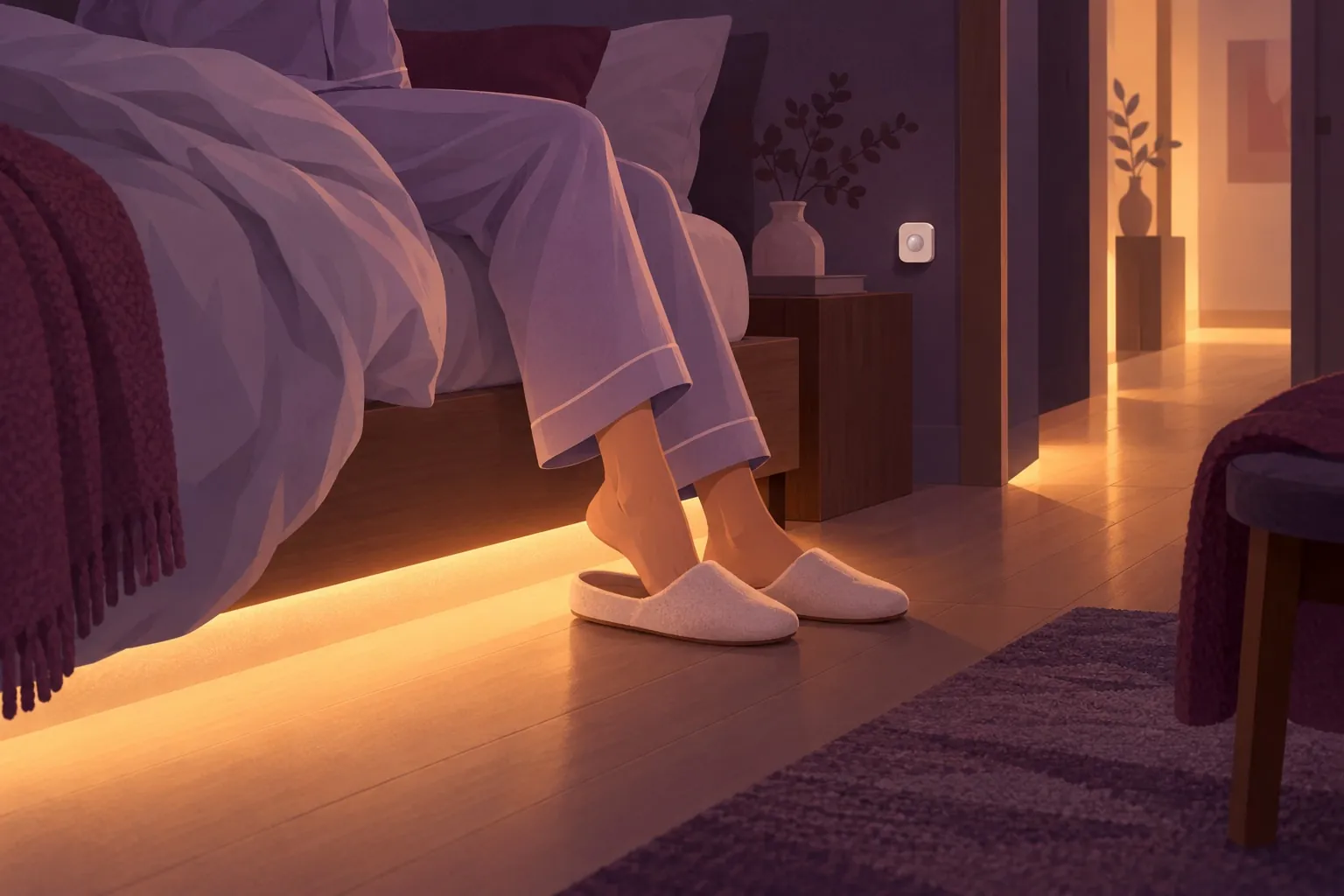
· KoniIt's 3 a.m. You wake up and need to go to the bathroom. The switch is on the other side of the room. The ceiling light would be blinding, and it might wake your partner. So you get up in the dark and feel your way along the wall, hoping you won't kick something on the floor or lose your balance. Everybody knows this walk. Most of us have done it a thousand times without thinking. But it's exactly the kind of moment where things go wrong.
Fall prevention starts at home
According to the Swiss Council for Accident Prevention (BFU), around 127,000 people in Switzerland are injured in falls at home every year. That's about one in eight of all accidents outside work. Some of these injuries take a long time to heal, and with age, a fall can cost a piece of independence.
The BFU names poor lighting as one of the risk factors. It's not the only one. Loose rugs, missing handrails, medication and balance all play a part. But light is the one a home can take care of by itself.
Night lights that come on before you do
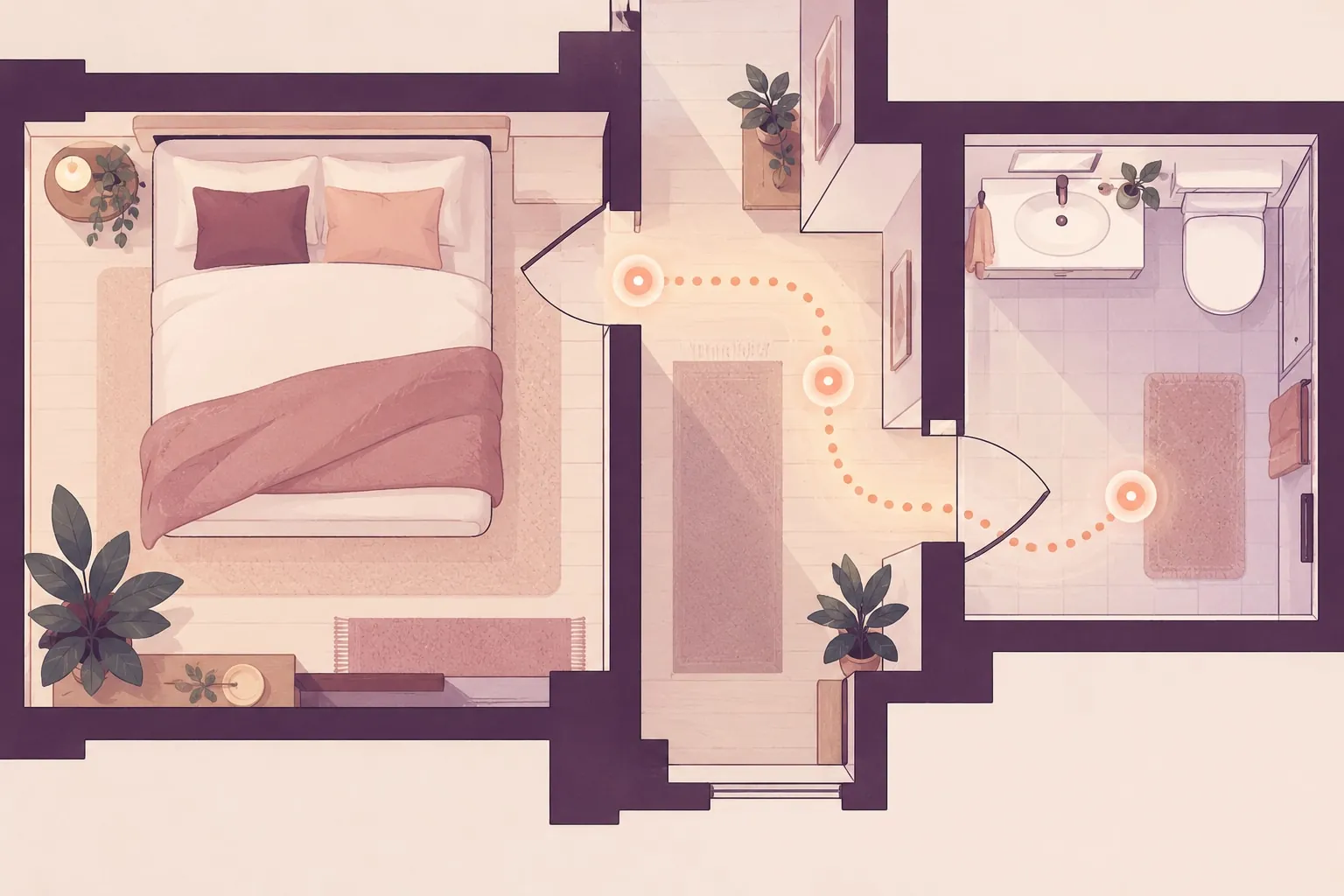
The idea is simple. Small motion sensors notice when you get up at night. A soft light switches on, along the way you actually walk: beside the bed, in the hallway, in the bathroom.
- At night it's gentle: low brightness, warm colour, enough to see the edge of the door frame but not enough to wake you fully, or anyone else.
- During the day it's normal: the same lights work at full brightness, or not at all if there's daylight.
- It switches itself off a few minutes after you're back in bed.
- No switch to find. That's the whole point.
Technically this is a few battery sensors and either smart bulbs in the lamps you already have, or a thin LED strip under the bed. No drilling needed, which also makes it work in a rented flat.
A second layer, if you want it
For some people, light is enough. Others, especially those who live alone, or their families, want a little more:
- An alarm button by the bed or in the bathroom. One press sends a message to the people you've chosen: a daughter, a neighbour, a friend.
- A quiet morning check. If there's been no movement in the flat by a time you set, someone you trust gets a short message to give you a call.
To be clear about what this is: Konihaus™ is not an emergency service. The messages go to the people you name, not to a control centre, and I don't call the ambulance myself. And no system can promise that nothing happens. What it can do is make a fall less likely in the first place, and make it less likely that one goes unnoticed.
Dignity matters
Many older people don't want a pendant around their neck or a camera in the bedroom. That's understandable. Nothing described here needs a camera, and the data stays in the home. The sensors are small and white, and the home looks like a home. Whoever lives there decides what is monitored and who is told, and that can change at any time.
Not just for seniors
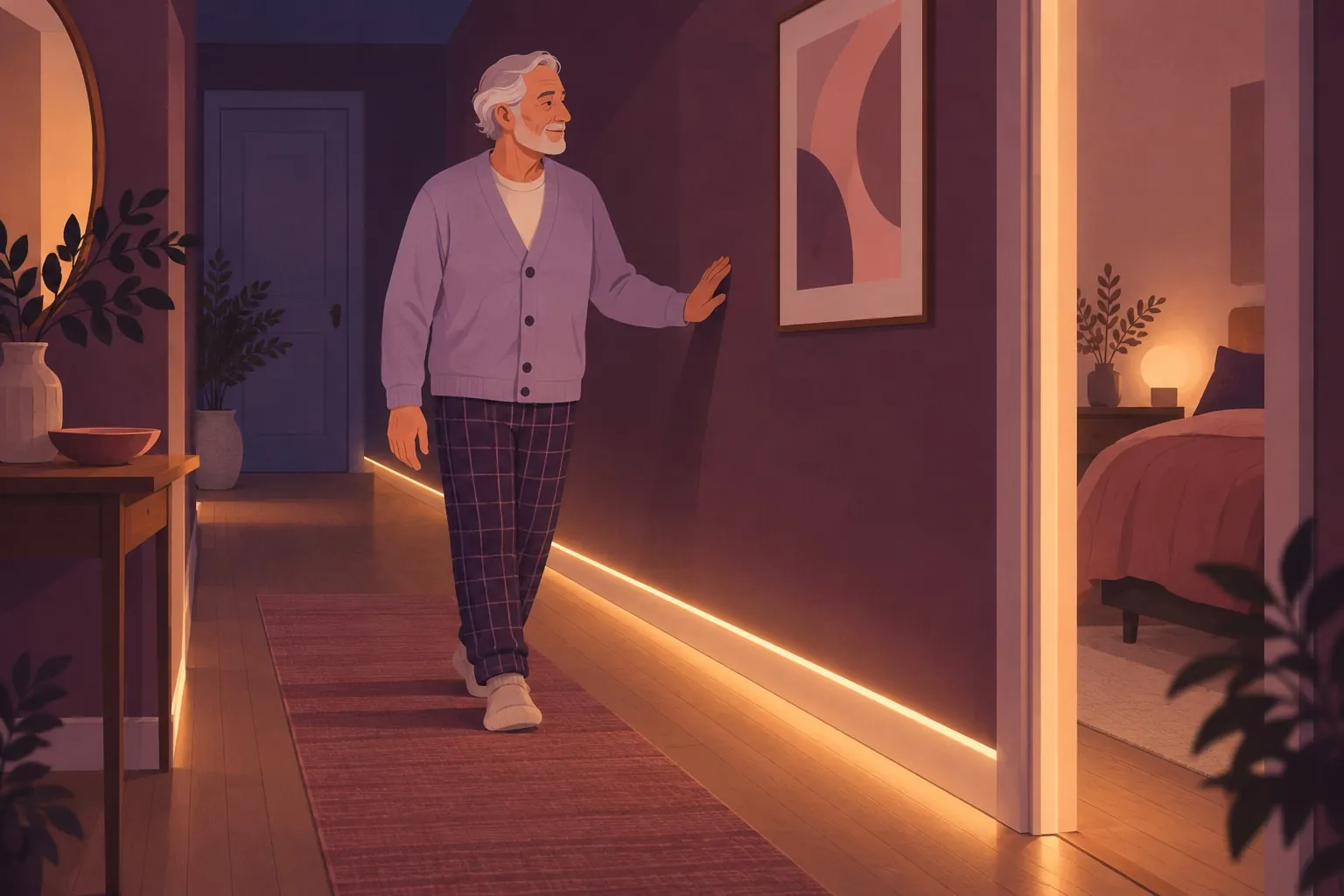
Parents walking to a crying baby at night. Guests who don't know where the light switch is. Anyone carrying a laundry basket down the cellar stairs. Light that knows when it's needed helps everyone. The same idea helps when the clocks go back and evenings get dark early.
If you want to look at the rest of the home too, the BFU has a free online checklist that goes room by room. It's only available in German. Light is one part. It's just the part that's easiest to solve.
Would you like this for yourself, or for your parents? Talk to Koni. The first conversation is free, with no obligation.