technology
No Vendor Lock-In
· KoniWhat Vendor Lock-In Actually Means
Imagine a home with Philips Hue lights, a Sonos speaker system, tado° thermostats, and a few Sonoff or Shelly sensors. Outside, there may be an Intex spa, a Worx Landroid robotic mower, and a Netatmo weather station. Each product may work well on its own. Each also tends to arrive with its own app, account, terminology, and way of creating schedules or scenes.
The difficulty becomes clear when you want them to act as one home. You may want the shades to close, the lights to dim, and the music to start when the living room becomes too warm. You may want the mower to pause when the weather station detects rain, or receive one meaningful alert instead of checking five separate apps. The individual products can be smart while the overall home remains fragmented.
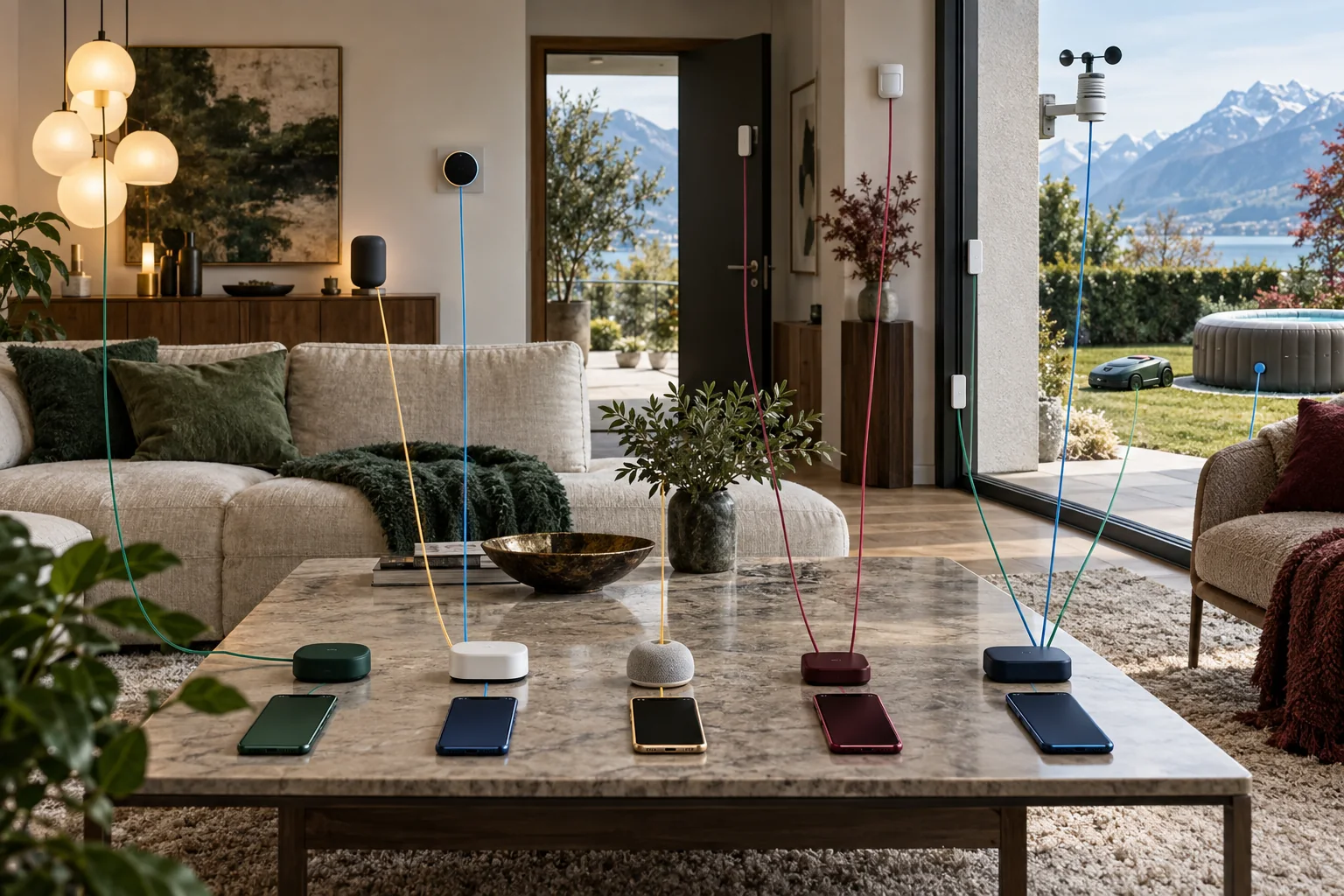
Apple Home and Google Home can bring many compatible products into one interface, and standards such as Matter are improving the situation. They do not remove every boundary, however. Support still depends on the precise model, generation, bridge, manufacturer account, region, and functions exposed by the integration. A product may appear in the shared app while some of its settings remain available only in the manufacturer's own app.
Now imagine that you find Paulmann smart lights that suit a room better than your existing bulbs, or you decide to replace several mixed sensors with Sonoff models. In a tightly controlled ecosystem, that apparently simple purchase can lead to a new bridge, another account, rebuilt scenes, or the loss of functions you already use. The old hardware does not literally become worthless, but the time invested in connecting and automating it may not transfer cleanly.
That is vendor lock-in: changing one part of the system carries consequences far beyond that device.
Konihaus™ Connects Different Systems
Konihaus™ uses Home Assistant as a common automation layer. It can bring together devices and services that communicate through Zigbee, Z-Wave, Matter, WiFi, MQTT, local network interfaces, and supported manufacturer integrations. Instead of asking every product to understand every other product, the central system translates their states and controls into one consistent model.
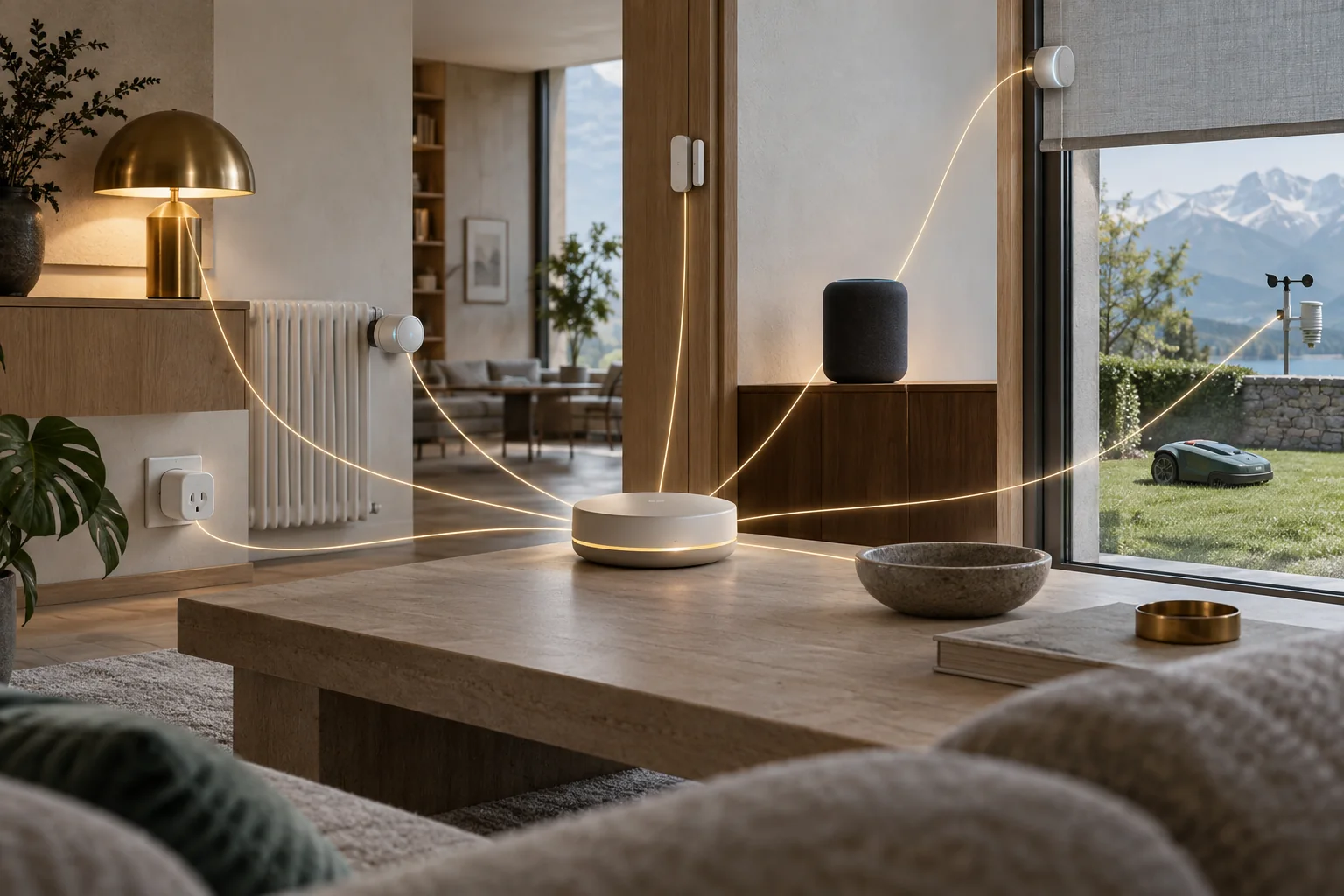
This does not mean that every smart device is automatically compatible or fully local. Some products expose only part of their functionality. Others still require a manufacturer account or cloud connection. Compatibility can also change between product generations; tado° and tado° X, for example, do not use exactly the same integration path.
Konihaus™ therefore checks the exact model, protocol, available integration, and required external services before recommending or installing a device. The goal is not a vague promise that everything works with everything. It is a documented system in which the important functions work together and any remaining dependency is visible from the start.
One Interface, Shared Automations
Once compatible devices are connected, their manufacturer matters less to the automation. A Shelly sensor can trigger Philips Hue or Paulmann lights. A Netatmo weather value can influence shades or ventilation. A tado° temperature reading can become one condition in a wider energy routine. Sonos can take part in a scene without becoming the platform that controls the rest of the home.
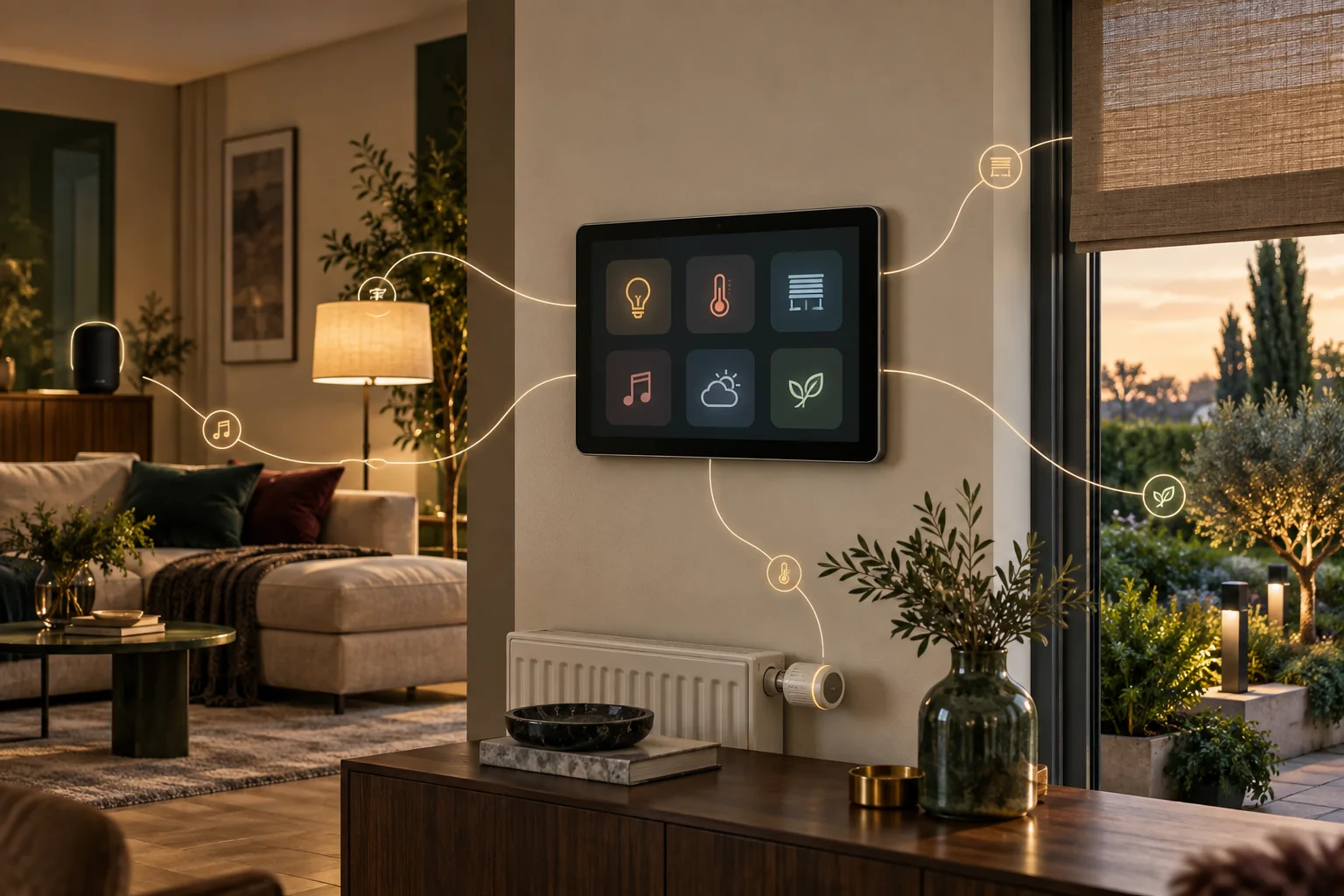
The devices appear in one interface and can participate in the same scenes, schedules, and notifications. Their original apps may still be useful for firmware updates or specialist settings, but they no longer need to define the way you operate the whole home.
Changing a Device Without Rebuilding the Home
Suppose a room currently uses Philips Hue bulbs and you later prefer compatible Paulmann Zigbee lights. Konihaus™ first checks which functions the new lights expose through the installed Zigbee coordinator: switching and dimming are commonly standardized, while colour effects, transition behaviour, or manufacturer-specific scenes may differ.
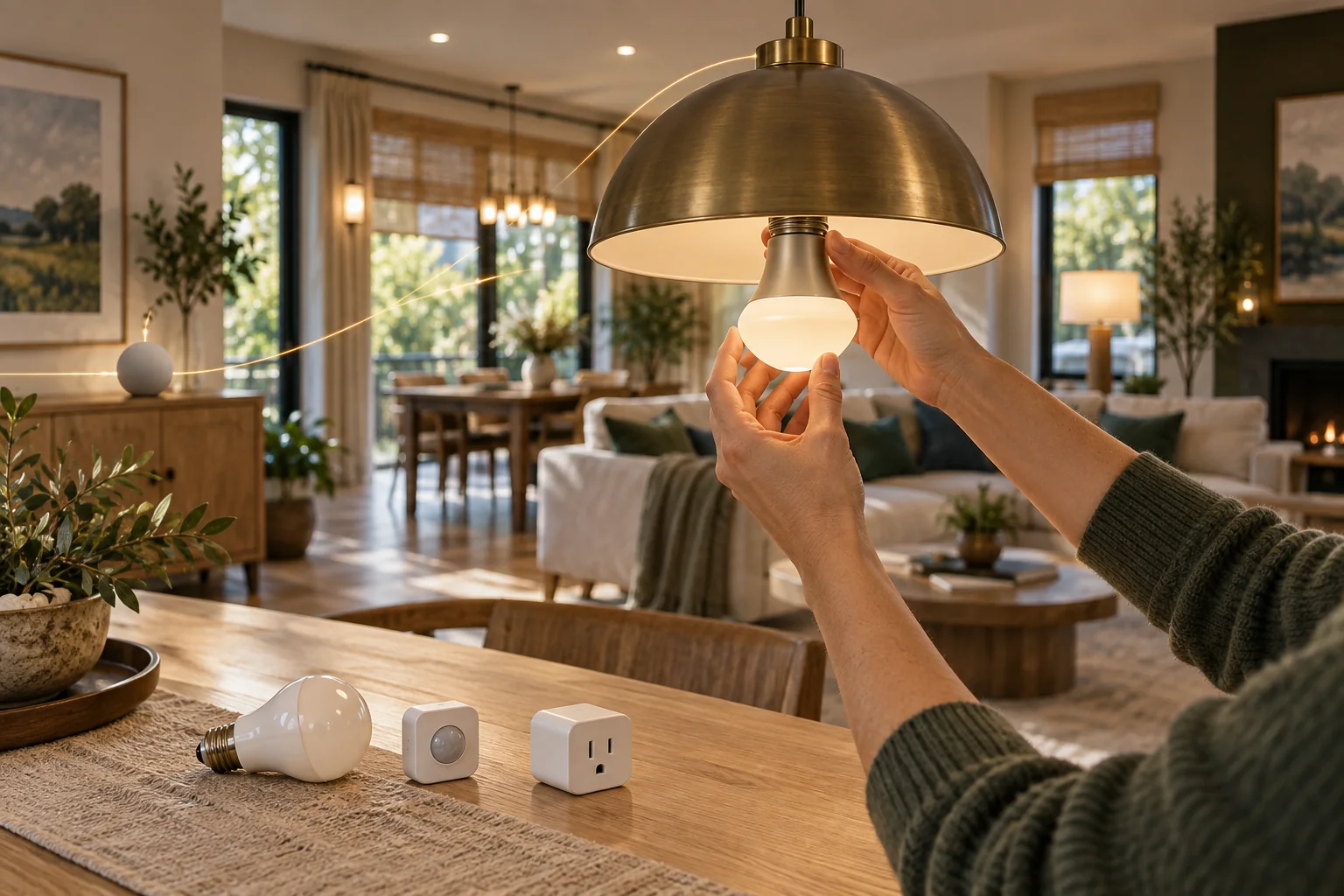
After the new lights are paired, the existing room logic can be reassigned to them. The automation does not have to be rewritten around a different brand's app. The same principle applies when replacing a motion sensor, smart plug, thermostat, or another component: the device changes, while the purpose of the automation remains understandable and reusable.
This is practical interoperability. It preserves the structure of the home even when individual products change, while acknowledging that specialized features still need to be checked.
Your System Remains Yours
The central configuration, dashboards, schedules, and automations are stored on the local Home Assistant system and can be backed up. If a manufacturer changes its subscription, discontinues a service, or leaves the market, only the dependent integration is directly affected. Locally connected devices and unrelated automations can continue operating.
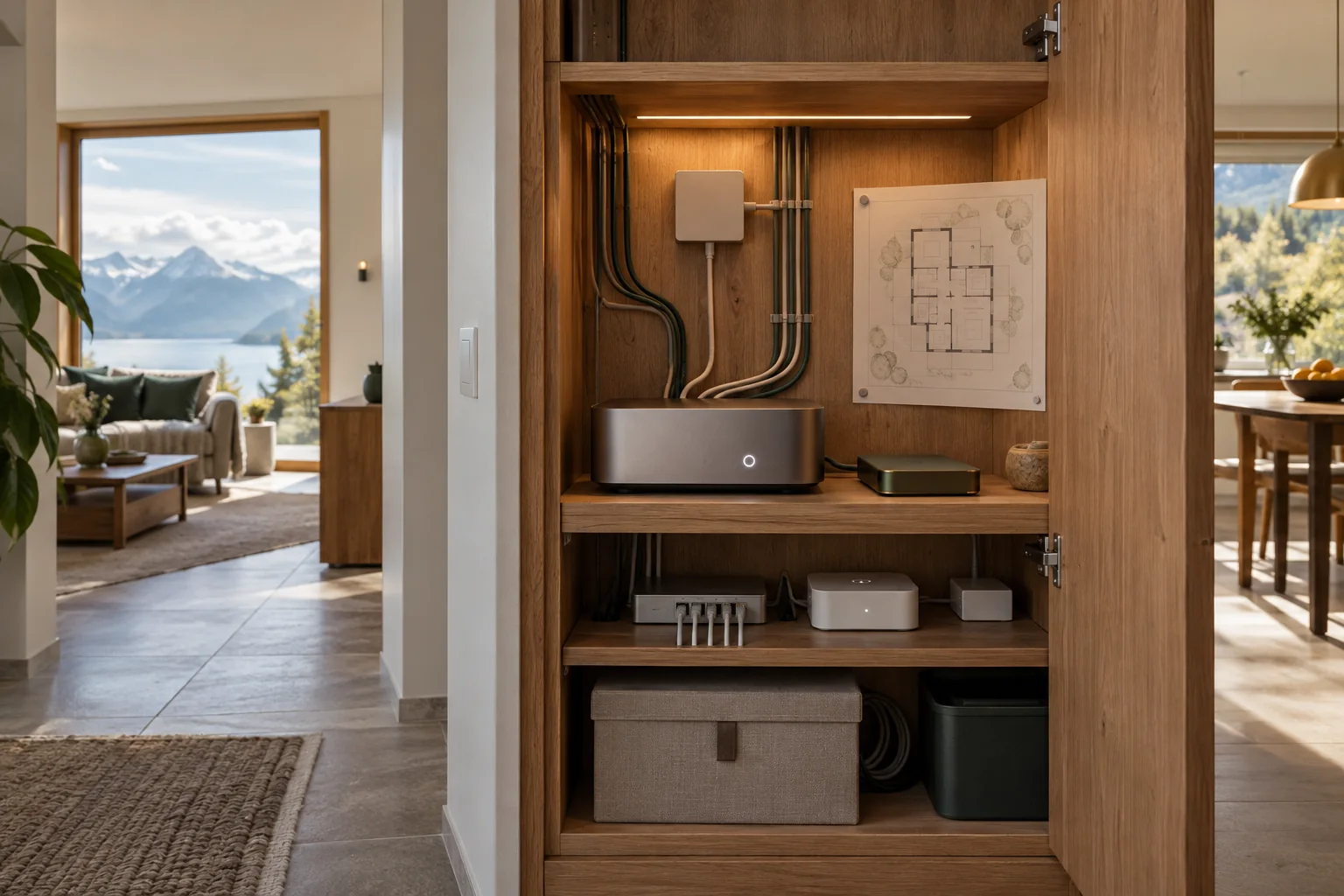
If you later choose another service provider, the hardware does not belong to Konihaus™. Your installation can be documented, handed over, maintained independently, or migrated where the target platform supports the devices and data involved. No migration between complex systems is entirely automatic, but an open, documented setup gives you a realistic path forward.
Why a Brand-Independent Smart Home Matters
A smart home develops over many years. Lights are replaced, heating systems change, new standards appear, and manufacturers alter products or commercial terms. A system designed around a single brand makes every later decision depend on that brand's catalogue and priorities.

A system built around interoperability gives you room to choose. You can select a better sensor without replacing the lights, add a new device category without moving the entire household to another app, and keep useful hardware for as long as it continues to meet your needs.
Konihaus™ is designed to protect that freedom. It connects suitable products across manufacturers, explains unavoidable dependencies, and keeps the automation logic under your control.
Explore the device and service integrations supported by Home Assistant.
Thinking about your own home? Talk to Koni about what would actually make a difference in yours — no obligation, no sales pitch.