energy
The Clocks Go Back Tonight. Your Home Won't Notice.
· KoniTonight at three in the morning, the clocks in Switzerland go back to two. We get an hour of sleep back, and on Sunday evening it gets dark an hour earlier than the day before.
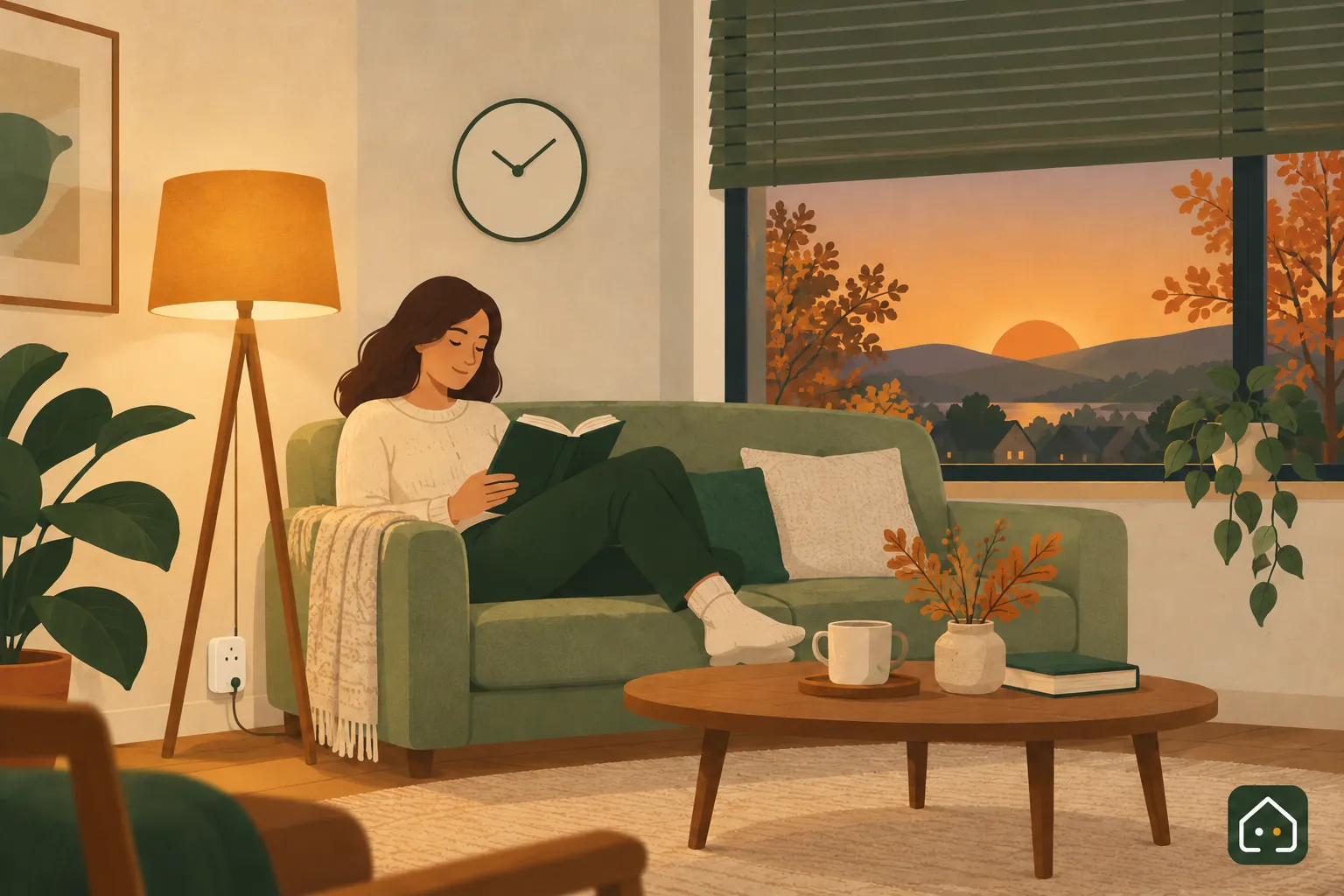
Most of us know the ritual that follows. The oven clock, the car, the radio alarm in the guest room. And the one we forget: the timer plug that switches the living-room lamp on at six. Either it's now an hour off, or you reset it and the lamp comes on at six again, long after the sun set at a quarter past five.
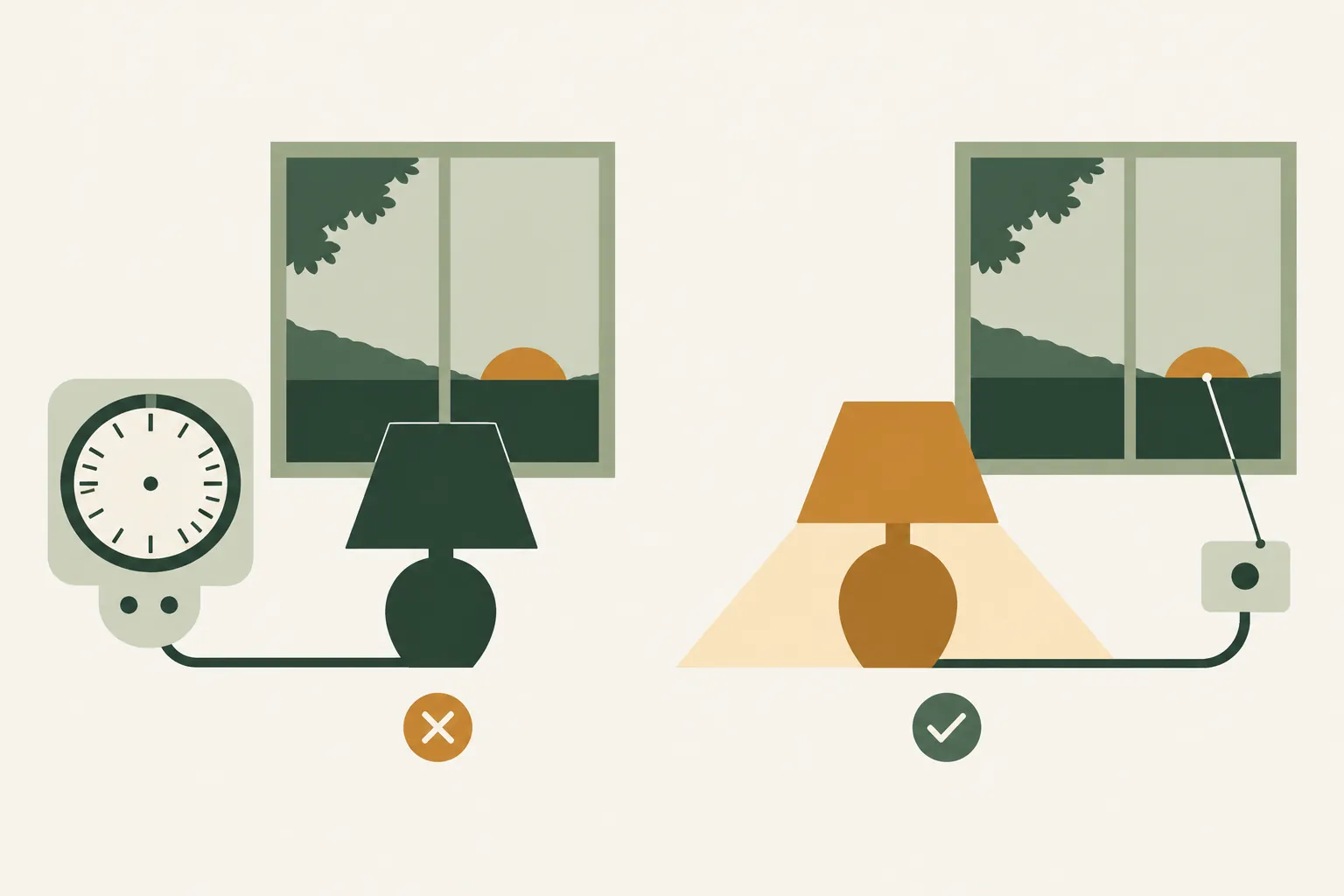
Timers know the time. They don't know the light.
A timer answers one question: what time is it? The question you actually care about is a different one: is it getting dark?
In June, those two answers are hours apart. By December, the sun sets in Zurich before half past four. A timer set in summer is wrong for most of the year. The clock change only makes it obvious.
A smart home that follows the sun
A smart home can ask the better question. Home Assistant knows where your home is and calculates sunrise and sunset for every day of the year. So instead of "lamp on at 18:00", the rule becomes "lamp on half an hour before sunset". On Saturday that's around ten to six. On Sunday it's around a quarter to five. Nobody has to touch anything.
The same idea works for:
- Blinds that close at dusk, so the warmth stays inside and nobody can look into a lit living room.
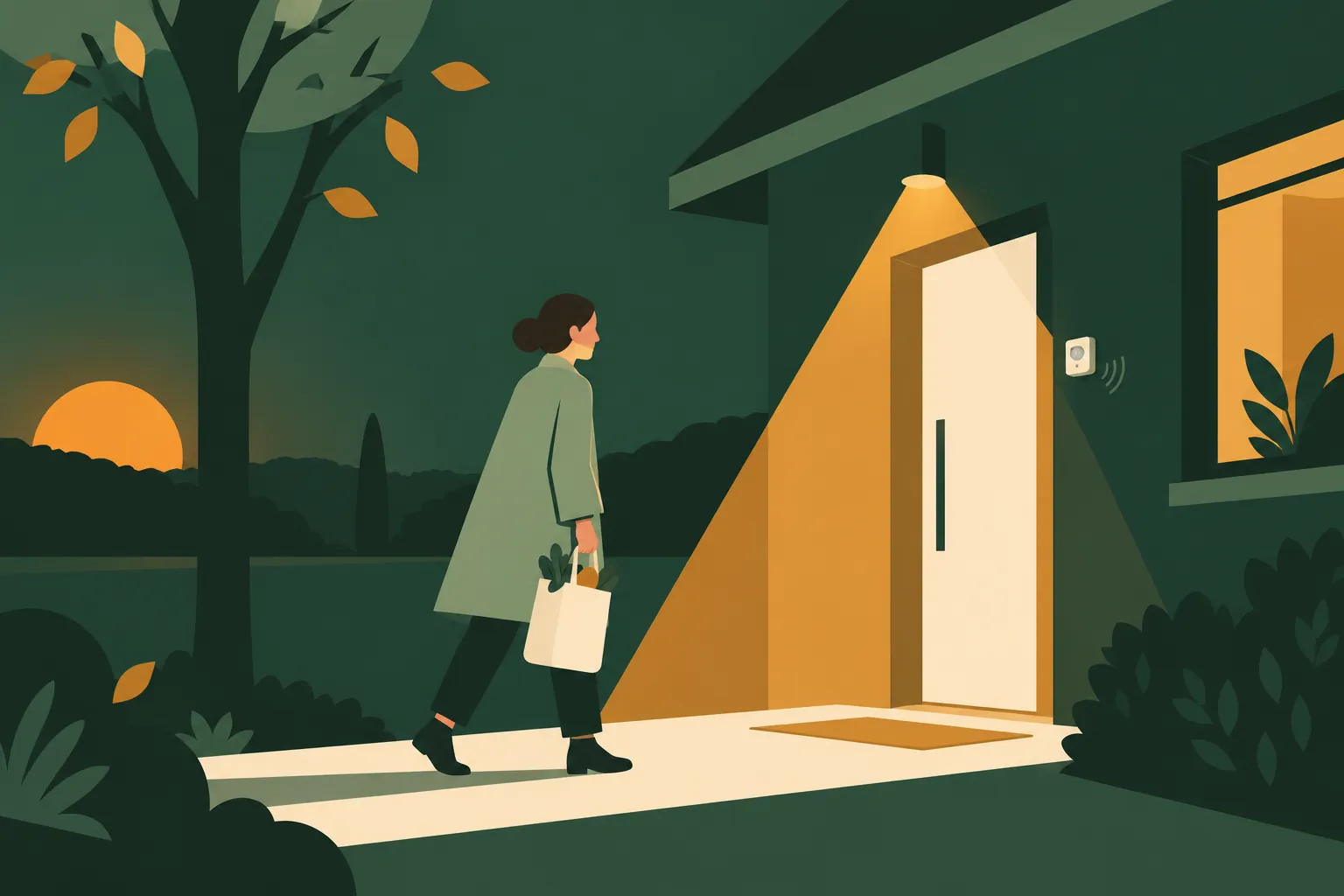
- The entrance light that comes on when it's dark and someone arrives, not at a fixed hour.
- The night light in the hallway that only lights up at night, softly, on the way to the bathroom.
- Grey November afternoons. With a small brightness sensor, the light comes on when the room is actually dim, even at three o'clock.
And the things that should follow the clock, like the morning heating schedule or a reminder at eight, simply move with the new local time. You don't reset them. The system does that.
Smart doesn't mean everything runs by itself
Not everyone wants the blinds to move on their own. Some people like closing them in the evening; it's part of ending the day. That's fine. The sunset rule can be a gentle reminder instead of an action. Or it only runs when you're away, so the home looks lived-in while you're not there. You decide where the line is.
Why such a small thing matters
The clock change is a small thing. But it shows the difference between a gadget and a system.
A gadget does exactly what you told it once. A system takes the situation into account: daylight, season, whether anyone is home. Over a year, that adds up to fewer lamps burning in empty rooms, fewer dark entrances in winter, and one less chore on a Sunday morning.
A small first step
You don't need a whole system for this, and it doesn't have to cost much. One smart plug for the living-room lamp and one rule that follows the sunset is often the first thing people notice, and keep.
Enjoy the extra hour of sleep.
Curious what that could look like in your home? Talk to Koni. The first conversation is free, with no obligation.