energy
Warm When You Arrive, Quiet When You Leave
· KoniThe Savings Everyone Knows About, and Rarely Gets
Turn the heating down when nobody's home. Close the shades before the afternoon sun hits. Switch off the standby power nobody uses. None of this is a secret. It's the kind of advice that appears in every energy-saving checklist, every utility newsletter, every well-meaning article.
The problem was never knowing what to do. It's that doing it reliably, every day, for years, without becoming a chore, is a different matter entirely. A thermostat you have to remember to adjust gets adjusted for a week and then forgotten. A shade you have to close by hand stays open on the one afternoon you're not there to close it.
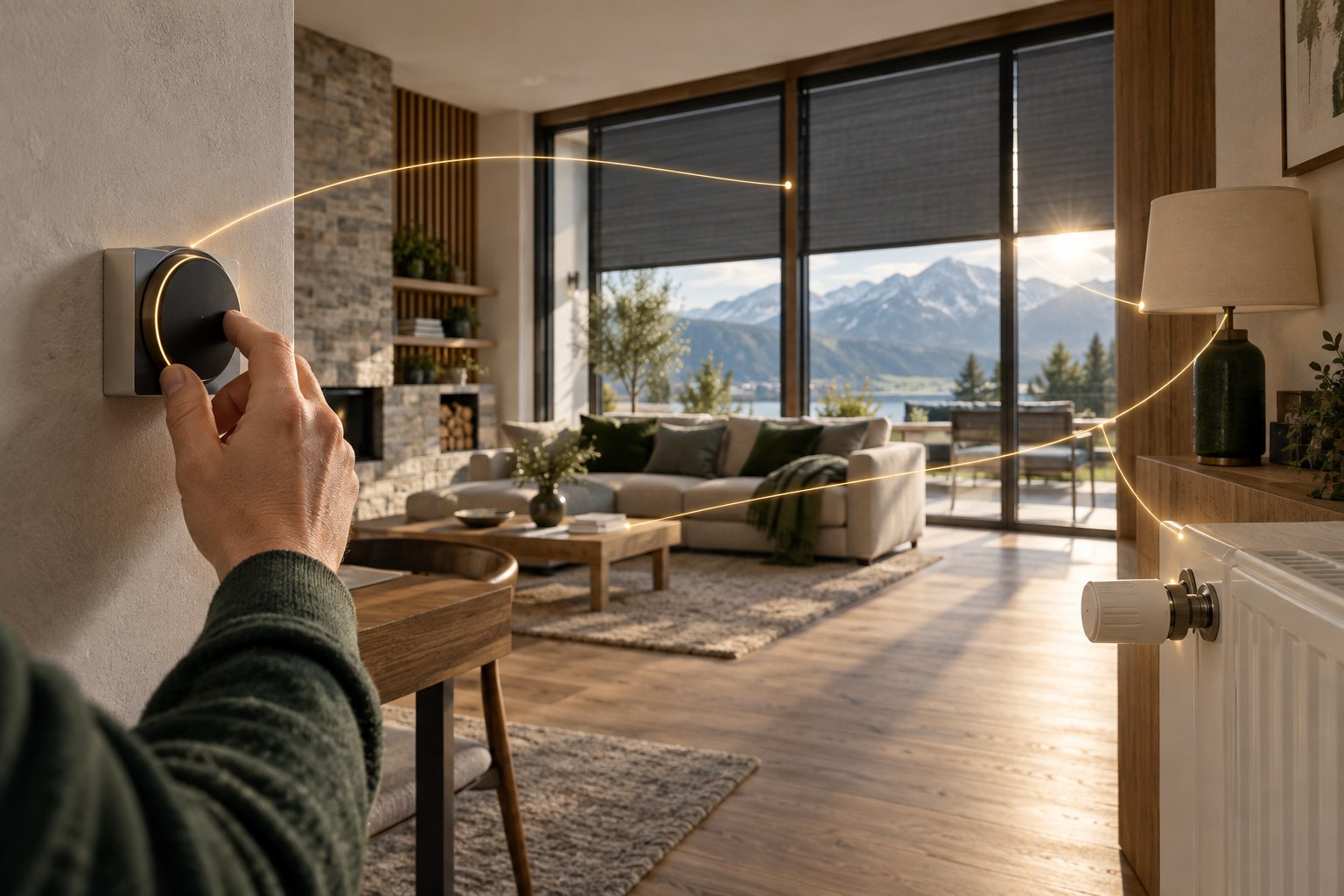
Where This Becomes a Real Problem: The Holiday Home
The gap between knowing and doing is easy to underestimate at home. It becomes obvious the moment the property is somewhere you're not.
A holiday home often runs one of two ways: a caretaker or property company visits occasionally and handles the essentials, energy efficiency included, if it hasn't slipped down the list that week. Or nobody visits at all between stays, and the heating either runs at full temperature the whole time, burning money for no reason, or gets switched off completely, risking cold-related damage and a very unpleasant first evening back.
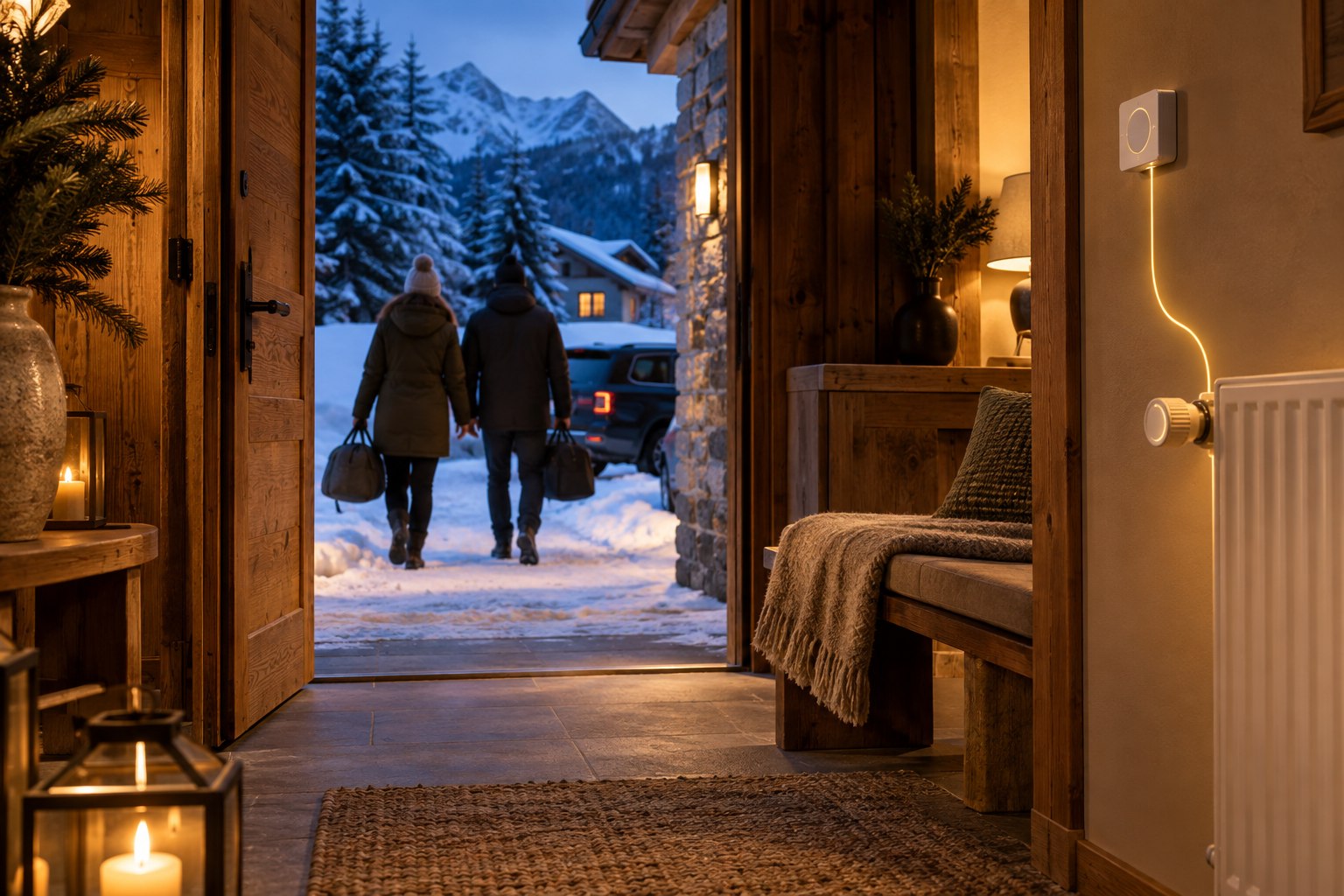
Automation removes the guesswork from both sides. Heating can hold a low, safe baseline temperature while the house is empty, and be raised to a comfortable level a few hours before you arrive, so the property is warm by the time you walk in rather than heating up around you. The same logic runs in reverse when you leave.
Shading and Ventilation Do Quiet, Constant Work
Heating and cooling get the attention, but shades and ventilation carry a surprising share of the load. In summer, shades that close automatically before direct sun hits a south-facing window keep a room from heating up in the first place, which is a cheaper problem to solve than cooling it back down afterward.
Ventilation matters just as much, particularly in a property that stands empty for stretches at a time. Controlled air exchange keeps humidity from building up in closed rooms, which is one of the more common ways mold gets started in an unoccupied home. A scheduled or humidity-triggered ventilation cycle addresses this without anyone having to think about it.

Moving the Expensive Hours
Electricity isn't priced the same throughout the day, and even where it is, the grid itself is under different amounts of strain depending on the hour. Running a washing machine, dishwasher, or a heat pump's water heating cycle at 2 p.m. is not the same as running it at 2 a.m., either in cost or in impact.
None of this requires anyone to stay up and start the laundry at night. A smart plug or a scheduling function on the appliance itself can shift the start time to whenever it's cheapest or least strained, while the actual task, loading the machine, happens whenever is convenient for the household.
Light That Reacts, Instead of Waiting to Be Told
Lighting is a small load individually, but it adds up across a home with dozens of fixtures, especially when lights are left on in rooms nobody is using. Presence-based control switches a light on when someone enters a room and off a set time after they leave, without needing a routine or a reminder. Daylight-aware dimming goes a step further, keeping a room at a consistent brightness by adding only as much artificial light as the daylight coming through the window doesn't already provide.

A Few More Places It Adds Up
Beyond the obvious categories, a handful of smaller automations tend to make a noticeable difference over a year:
- Standby power. Entertainment systems, chargers, and some kitchen appliances draw power even when "off." A smart plug that fully cuts power to a group of devices overnight or while nobody's home removes this quietly, without anyone unplugging anything.
- Per-room heating instead of whole-house heating. Heating a rarely used guest room or office to the same temperature as the living room is one of the more common sources of waste in a home with central heating. Zone control heats each room to what it actually needs.
- Open-window detection. A window left open with the heating still running is a fast way to lose the exact energy you just spent producing heat. A sensor can pause the room's heating for as long as the window is open.
- Weather-adjusted heating. A heating curve that responds to the outdoor temperature and forecast avoids overheating on a mild day and underheating on a cold one, rather than running to a single fixed setting year-round.
- Solar self-consumption. In a home with photovoltaic panels, shifting flexible loads (water heating, EV charging, laundry) to the hours when the panels are producing surplus power reduces what has to be drawn from or sold back to the grid.
- Consumption reports. A monthly summary that shows where energy actually went makes it possible to catch a failing appliance or a forgotten heater running in an empty room, long before it shows up as a surprise on the bill.
Why Saving Energy With a Smart Home Works
None of these measures are exotic. Most of them are things people already know they should do, like the small routines we stopped noticing. What changes with automation isn't the idea, it's whether it actually happens on the one evening you forget, the one week you're away, or the one appliance nobody thinks to check.
That's the case for energy efficiency in a smart home: not a new set of savings nobody knew about, but the old, obvious ones, finally running by themselves.
What This Looks Like in Practice
None of this needs to stay abstract. Home Assistant's built-in energy dashboard, also part of the Konihaus™ app, turns the household's actual consumption into a view like this: overall usage over the day, how much of it came from low-carbon sources, and what was drawn from or fed back into the grid.
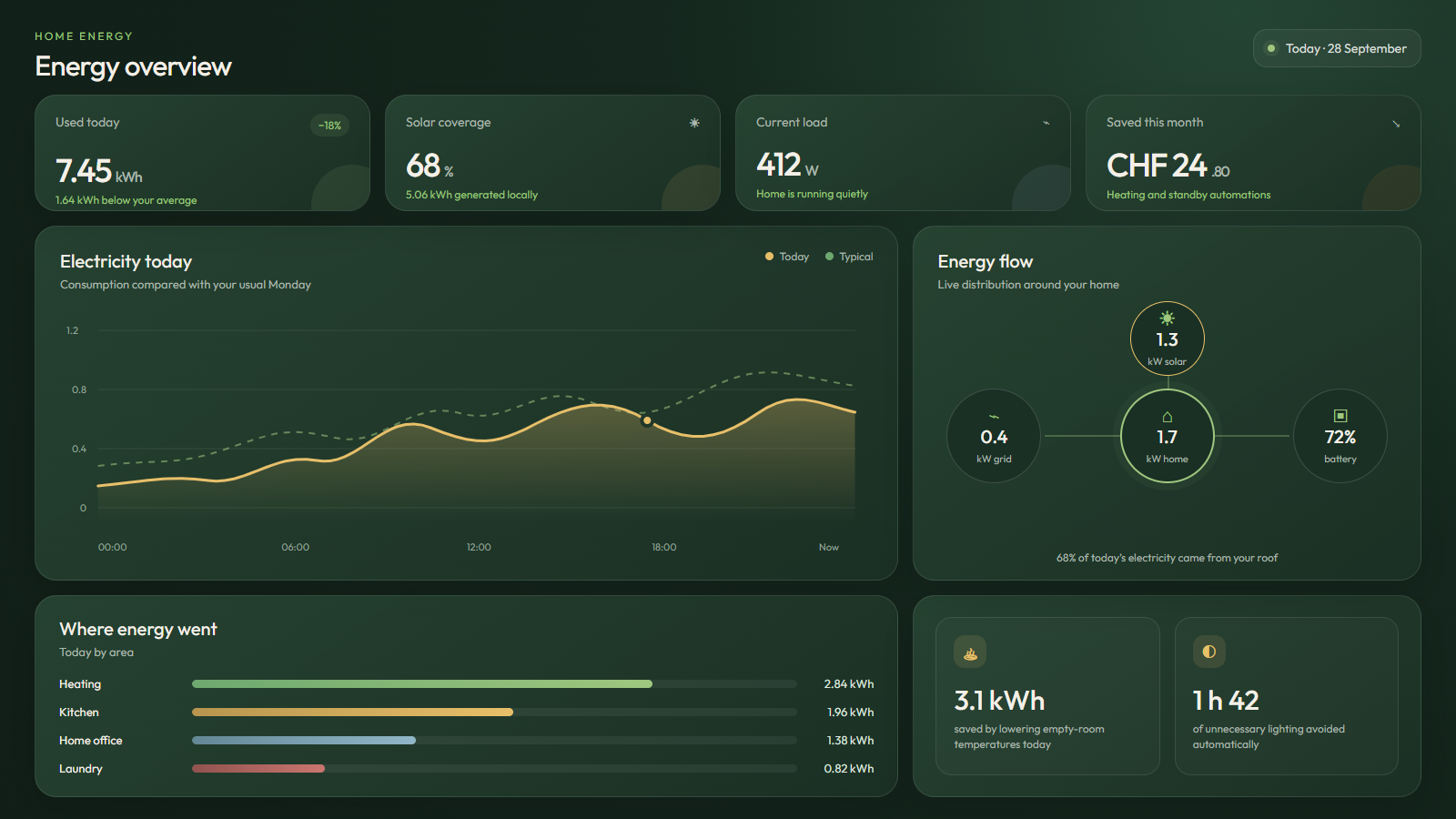
Break it down further and the same data shows which individual devices are actually driving the bill, hour by hour, so a fridge running normally and an oven spiking at breakfast are easy to tell apart from something that's quietly wasting power in the background.
This is what makes the difference between a monthly bill and an actual explanation: a bill tells you what you spent, this tells you why.
Read how Home Assistant handles energy monitoring and management.
Thinking about your own home? Talk to Koni about what would actually make a difference in yours — no obligation, no sales pitch.