guide
Airing, Heating and Mould
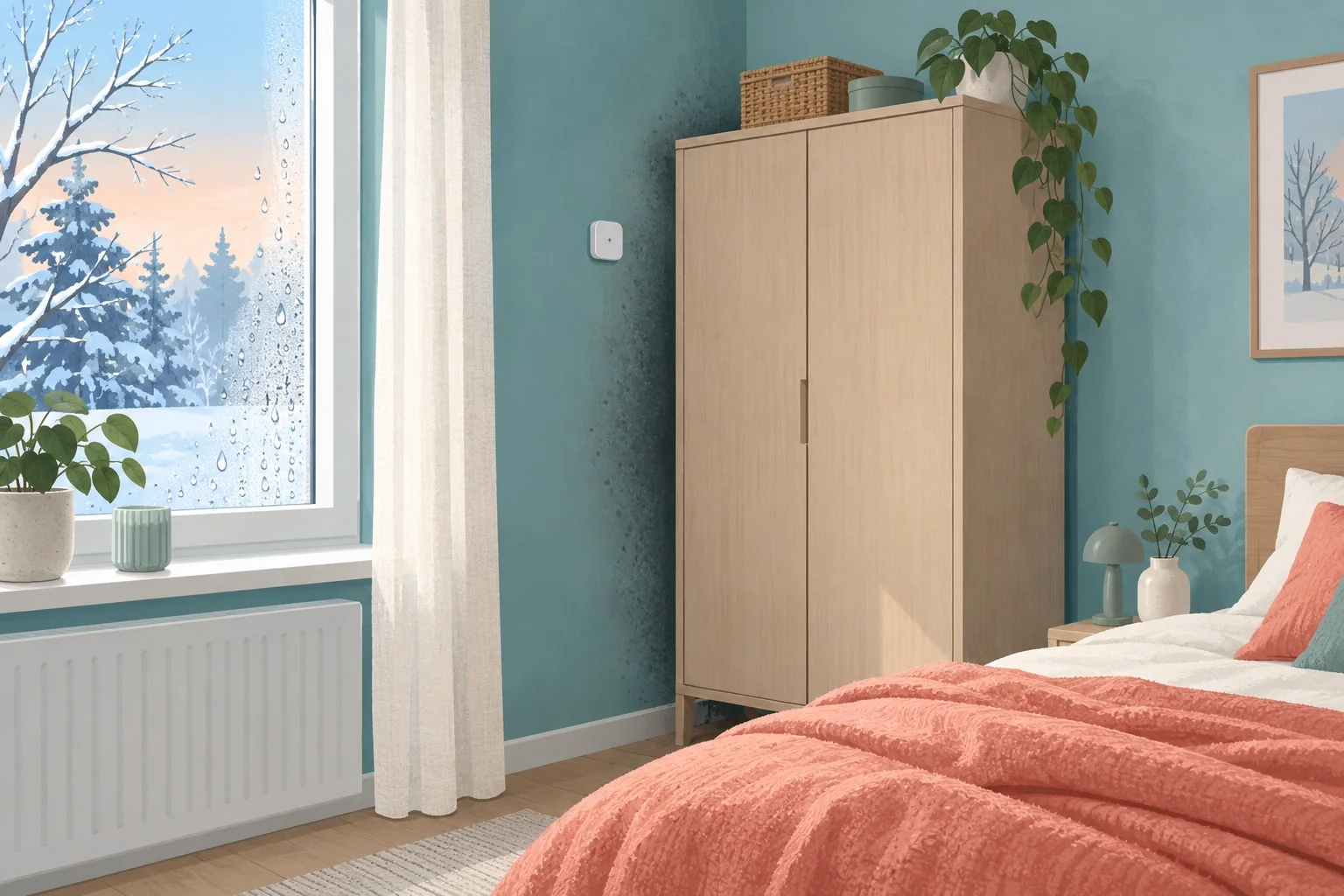
· KoniIt starts small. A grey shadow in the corner behind the wardrobe. Black dots on the silicone in the shower. Windows that are wet on the inside every morning. Then come the questions: am I airing wrong? Is it the building? And who pays?
Where the moisture comes from
People produce a lot of water just by living. According to a brochure by the Federal Office of Public Health (BAG), a household of four releases about 7.5 litres of water vapour into the air every day, up to 12 litres with a lot of showering, cooking and drying laundry. That moisture has to go somewhere. If it can't get out, it settles where the wall is coldest: in corners, on outside walls, behind furniture.
Older buildings without wall insulation and ground-floor flats are more at risk, the BAG notes.
What the guidelines say
- Humidity: the BAG recommends 30 to 50% relative humidity indoors. On very cold days it shouldn't go above 40%, and in the heating season not above 50%.
- Airing: a guidance sheet from the canton of Basel-Stadt, based on the BAG, recommends airing with the windows wide open at least three times a day for 10 minutes, ideally with a through-draught.
- Heating: about 21 degrees in living rooms. In well-insulated buildings, bedrooms can be cooler.
- Furniture: keep at least 10 cm between large furniture and outside walls, so air can circulate.
All of this is easy to read and hard to keep up every day. Who knows what the humidity in the bedroom is right now?
What a few sensors change
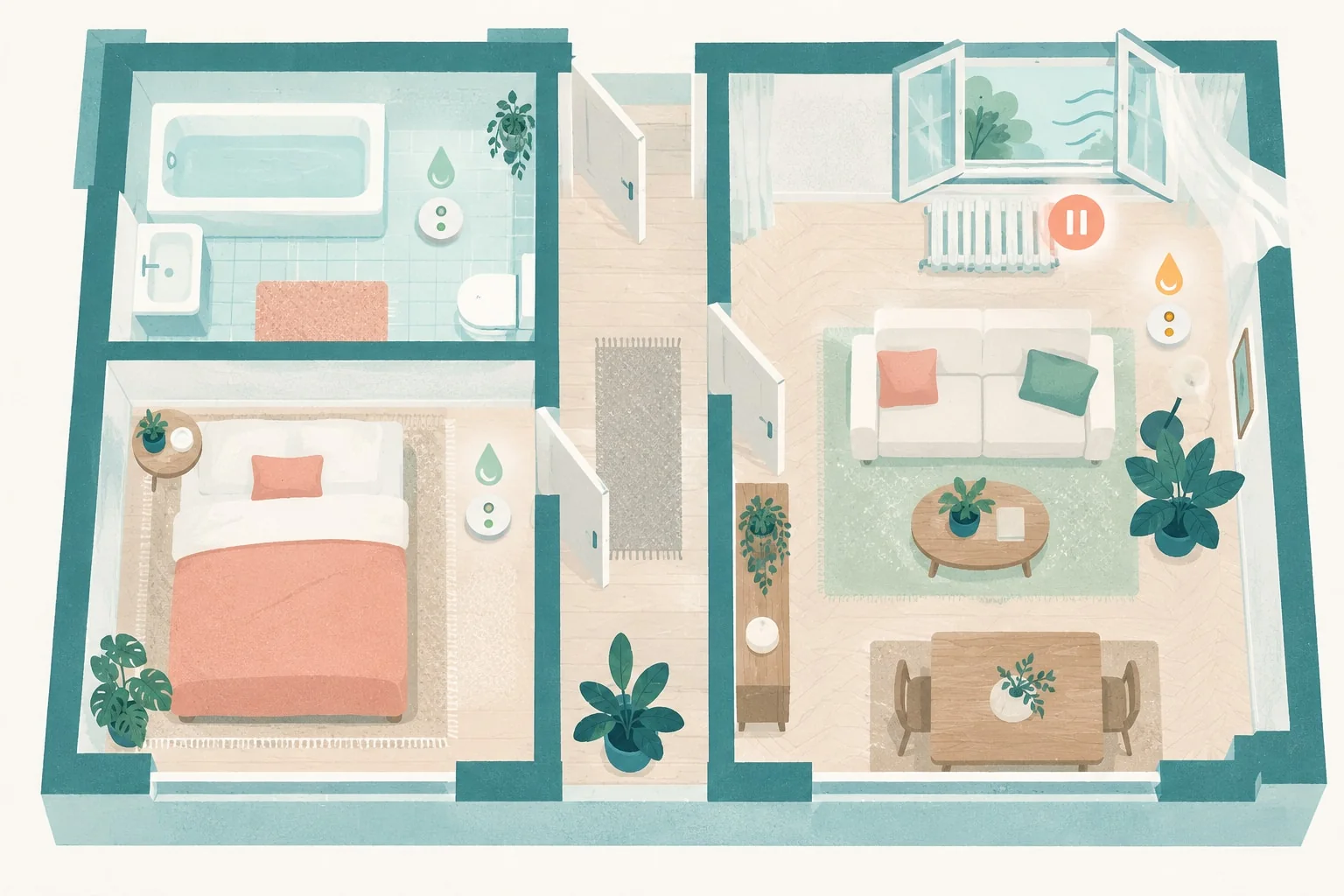
- Humidity you can see. Small sensors in the bedroom, the bathroom and behind the wardrobe on the outside wall show the real values. You no longer have to guess.
- A reminder at the right moment. When the humidity climbs above the limit you've set, a lamp changes colour or your phone gets a short note: time to air.
- And a reminder to close again. After ten minutes, the next note: the room is aired, close the window so it doesn't cool down.
- Heating that pauses. A sensor on the window turns the radiator down while it's open. Airing then doesn't waste heat, as described in my post on saving energy.
- The bathroom after showering. The fan runs until the humidity is back to normal, or a dehumidifier on a smart plug switches on by itself.
For renters: a record helps
If mould does appear in a rented flat, the question of fault often comes up quickly. A sensor log of how you heated and aired is much better than "I always aired properly". In my post for renters I describe why such records are useful.
The Basel-Stadt guidance sheet is also clear about the rules: as a tenant, you must report mould to the landlord, ideally in writing. The landlord has to keep the flat in a usable condition. If the mould keeps coming back even though you heat and air properly, the cause may be the building itself, for example a cold spot in the wall. That's a case for the landlord, not for sensors. I'm not a lawyer, and this isn't legal advice.
Holiday homes and empty flats
An empty home has the same problem without anyone to air it. Humidity sensors and a ventilation or dehumidifier routine help there too, and they fit well with the frost watch for holiday homes.

Small effort, clear effect
Two or three sensors, one rule for airing and one for heating. That's often all it takes to turn a vague winter worry into a few clear signals.
Fighting damp walls or foggy windows? Talk to Koni. The first conversation is free, with no obligation.