guide
Smart Home as a Renter: What You Can Do Without Asking
· Koni"I'd love a smart home, but I'm renting." I hear that sentence more than any other. Behind it is a reasonable worry: you don't want trouble with the landlord, and you don't want to leave your deposit on the wall when you move out.
The good news: most of what makes a home smarter doesn't touch the building at all.
What the law says, in short
In Switzerland, changes to a rented flat need the landlord's written consent. That's Article 260a of the Code of Obligations. Small things are a different matter: holes for pictures or a shelf are generally accepted without asking. But even then, the landlord can ask you to restore the original condition when you leave, for example to fill the holes properly.
That's the frame. What it means in practice depends on your lease, so read it, and if in doubt, ask in writing. I'm not a lawyer, and this isn't legal advice.
Smart home for renters: the simple rule
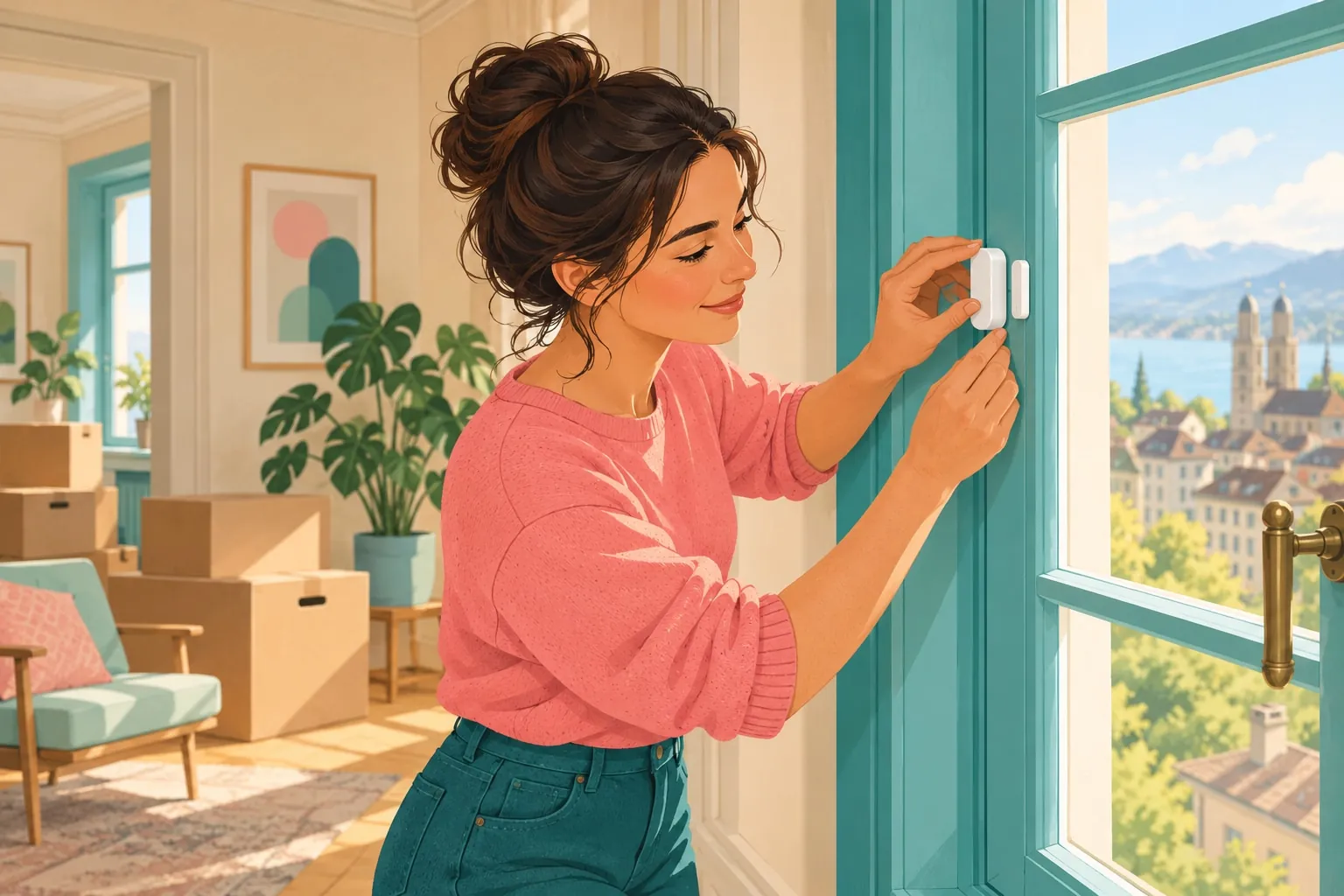
If it plugs in, screws into a lamp, sits on a shelf or sticks on, and leaves nothing behind when you take it away, you're generally on the safe side. That covers more than you'd think:
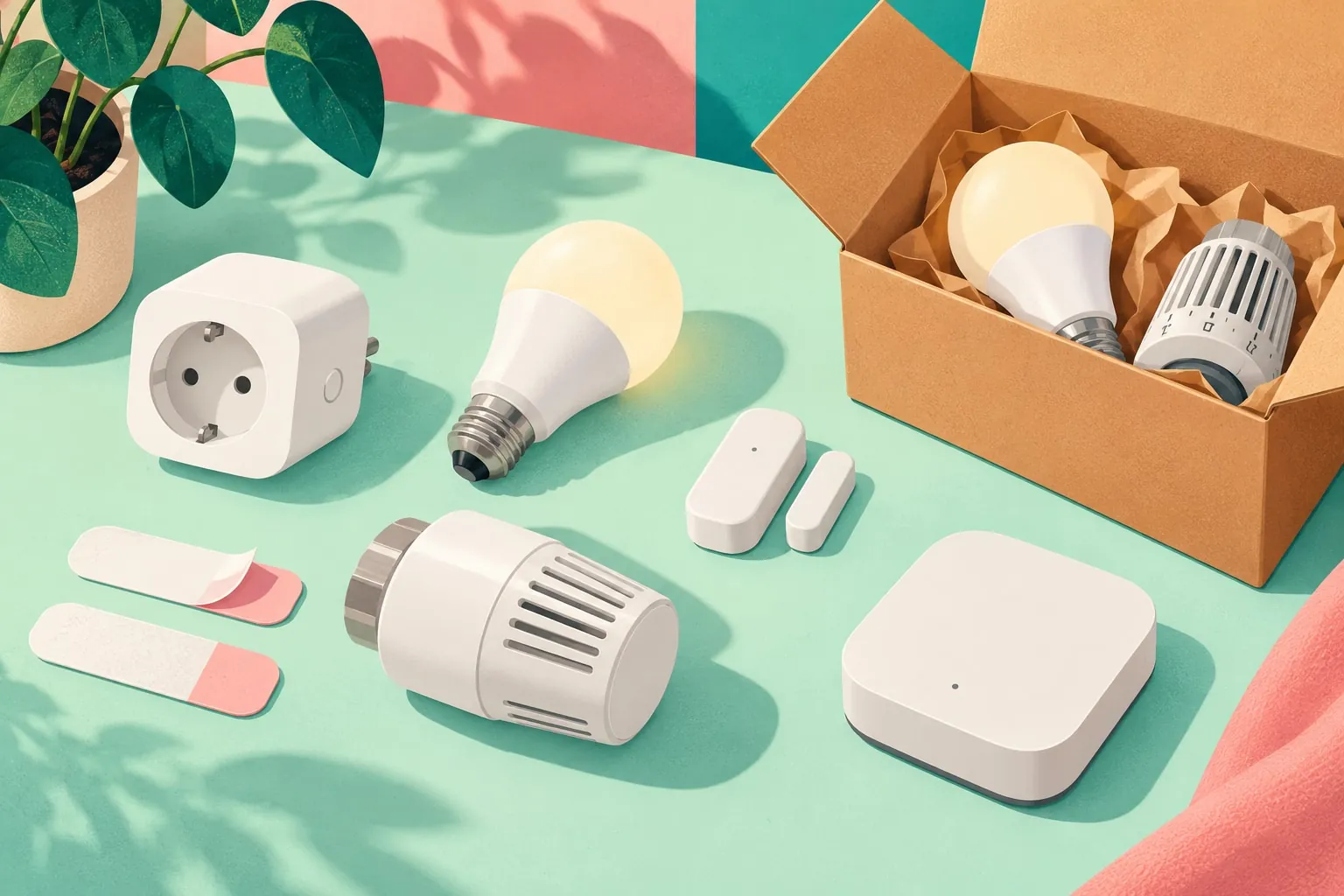
- Smart plugs for lamps, the coffee machine, the fan in summer.
- Smart bulbs in the lamps you already have.
- Battery sensors for doors, windows, motion, temperature, humidity and water, mounted with removable adhesive strips.
- The hub, a small box on a shelf next to the router.
- Radiator thermostats. In most flats you can swap the thermostat head on the valve without tools. Keep the original head and put it back when you move.
- Lights under cabinets or the bed on a plug, without wiring, for example as a night light on the way to the bathroom.
Ask first
Some things touch the building, the shared areas or other people. Ask your landlord, or the administration, in writing before you do them:
- Anything wired into 230 volts: switches, ceiling lights, the fuse box. That's for an electrician anyway.
- Motors for exterior blinds (Storen). They belong to the building. Many wired blinds can still be made smart without new wiring: if the motor cable has a plug connector, a plug-in radio receiver, for example from Somfy for roller shutters or exterior venetian blinds, goes between the motor and the power supply and can be removed again later. It still sits on the building's 230-volt installation, so ask first and have it fitted by a specialist.
- The front door cylinder or a lock on it, especially if it's part of a building-wide key system.
- Drilling into tiles or anything on the façade or balcony railing.
- Cameras that see shared areas, like the stairwell, the entrance or the neighbour's door. Your neighbours have a right to privacy too. Inside your own four walls is your business; the stairwell isn't.
The move-out box
One habit saves a lot of trouble: whatever you replace, keep it. The original thermostat heads, the old bulbs, the little cover you took off. Put them in a labelled box. On moving day, everything goes back, and the smart parts go into the moving van with you.
Why it's worth it for renters
A smart home is often seen as something for owners. I think renters get more out of it than they expect:
- It moves with you. The hardware isn't part of the flat; it's yours. And because it uses open standards, you're not tied to one brand.
- Leak sensors protect your relationship with the landlord, and with the neighbours below.
- Temperature and humidity records help if there's ever a disagreement about damp or mould. A log of how you heated and aired is better than "I always aired properly".
- Lower heating and electricity costs when the home knows whether you're there.
How Konihaus™ does it
For renters I plan everything so it can come out again: no drilling, no wiring, nothing on the building. If something on your wish list would need the landlord's consent, I'll tell you before we start, and you decide whether to ask or to skip it.
Renting and curious what's possible in your flat? Talk to Koni. The first conversation is free, with no obligation.