energy
Is Solar Worth It in Switzerland in 2027? An Honest Check
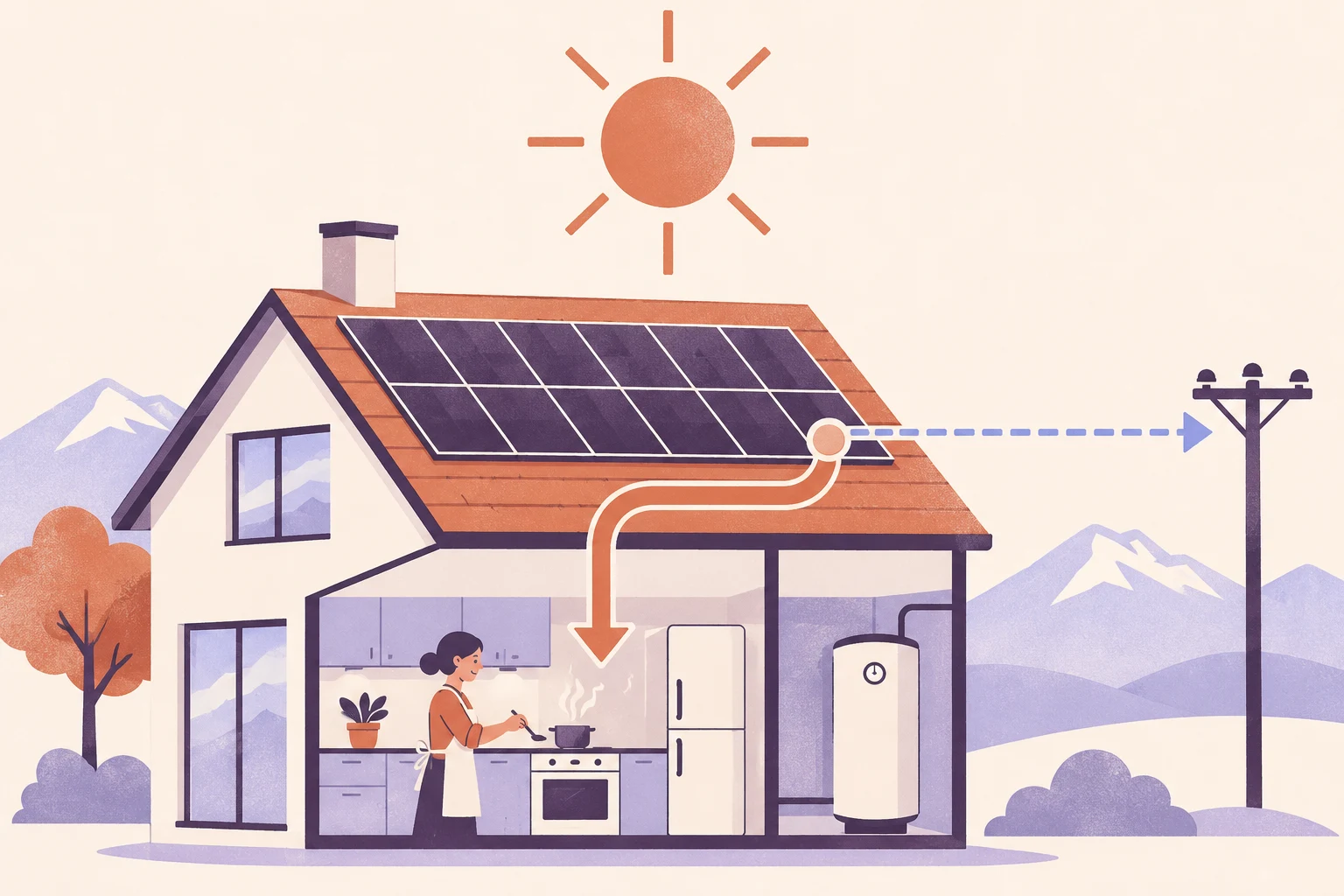
· KoniIn the post about electricity prices in 2027 I wrote that the real lever on your bill is how much electricity you buy. Solar is the other lever: you make some of it yourself. So is it worth it in Switzerland in 2027? Often yes, but it depends less on the panels than on how much of the power you use yourself. And one rule changes on 1 January 2027, which makes that point even stronger.
The short answer
For a house with a reasonable roof, a solar system typically pays back in about 9 to 13 years. The wide range is not vagueness, it is the point: the more of the power you use yourself, the shorter it gets. Below is a worked example, so you can see where the numbers come from.
What it costs
The figures are indicative averages from Swiss price guides in 2026. Your quote will differ, depending on roof type, scaffolding and region.
- Installed price: about CHF 1,800 to 2,500 per kWp. A typical house system of 10 kWp is CHF 18,000 to 25,000 before subsidy.
- Subsidy: the federal one-off payment (Einmalvergütung) is a fixed base amount plus an amount per kWp, up to about 30% of the cost. For 10 kWp that is roughly CHF 4,500 to 5,200. You apply after the system is running, through the Pronovo portal. The rates change, so check the current ones on pronovo.ch. Some cantons and municipalities add their own.
- Tax: the investment is generally deductible and the subsidy counts as income. The details differ by canton, so ask your tax office or adviser.
- Net cost: roughly CHF 13,000 to 20,000 for 10 kWp.
Where the money comes from
A solar system makes two kinds of kilowatt hours, and they are worth very different amounts.
Power you use yourself replaces power you would buy. At the 2027 median price that is about 26.5 centimes per kWh.
Power you feed into the grid earns much less. I use EKZ as an example, since it supplies a large part of the canton of Zurich. From 1 January 2027 it pays the Swiss spot price at the hour you feed in, with a minimum of 6.00 centimes per kWh for systems under 30 kW. Expect roughly 6 to 10 centimes. That is my estimate, not a forecast. On top, there is an optional payment for guarantees of origin: up to 3 centimes in winter and up to 0.5 centimes in summer. A smart meter matters here: at EKZ, systems without one are paid the quarterly reference price instead of the spot price. Other utilities have other rules, so look up yours.
So a kWh you use yourself is worth roughly three to four times a kWh you sell.
A worked example
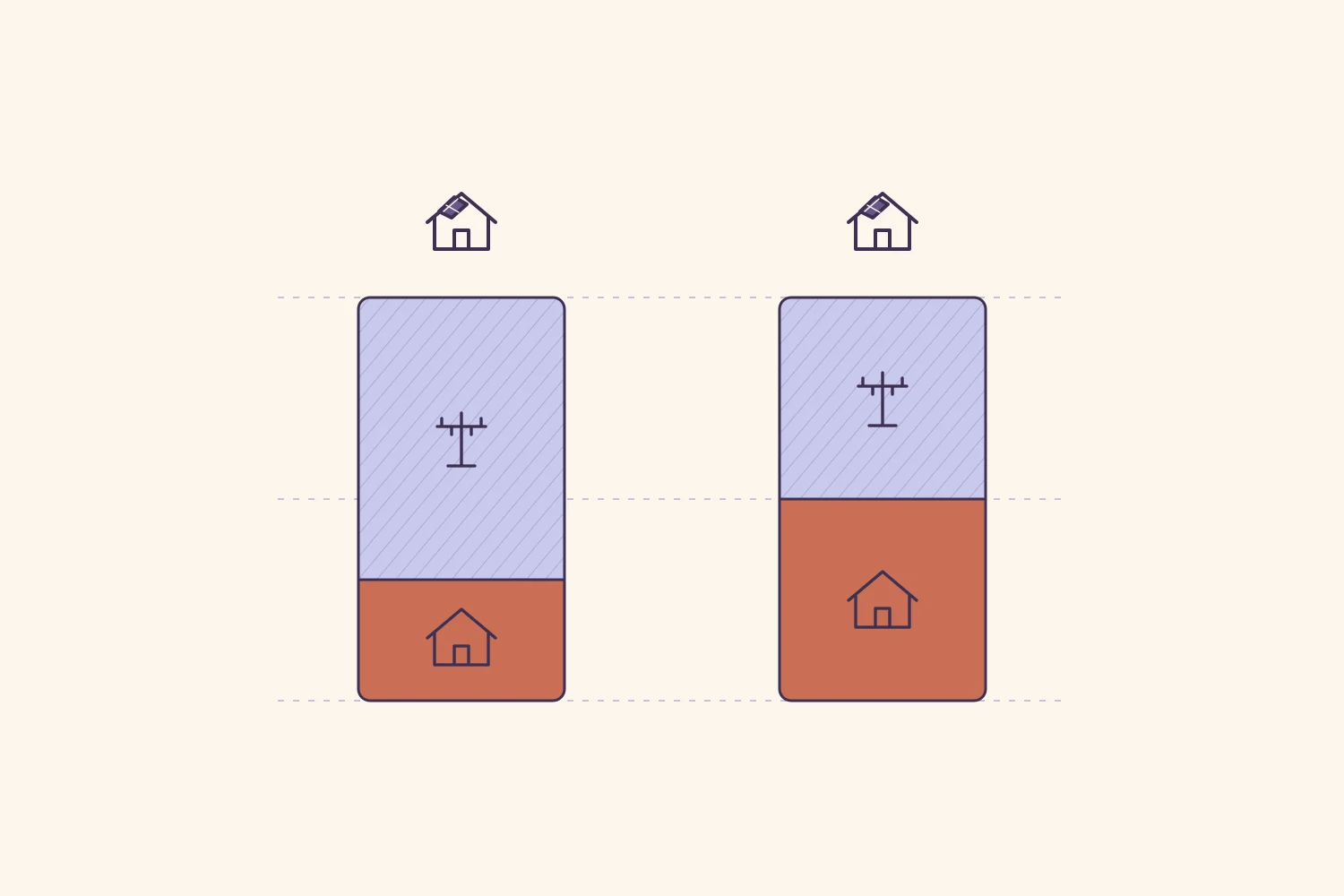
This is my own calculation, with assumed numbers: a 10 kWp system that makes about 9,500 kWh a year, a net cost of CHF 15,000, 26.5 centimes for power you use yourself and 6 to 10 centimes for power you feed in.
- You use 30% yourself: about CHF 1,150 to 1,400 a year. Payback in about 11 to 13 years.
- You use 50% yourself: about CHF 1,550 to 1,750 a year. Payback in about 9 to 10 years.
It leaves out price changes, maintenance and the day the inverter needs replacing. A real roof and a real household will differ. But the difference between the two lines is the message.
What changes on 1 January 2027
Until now, feed-in was paid on a price averaged over a quarter, the same for noon and for evening. From 2027, network operators may pay by the spot price at the time of feeding. On a sunny summer noon, every roof produces at once, so that is when prices are lowest. A minimum payment protects small systems, and a utility may pay more than the minimum, so it is worth comparing.
The direction is clear: the new model rewards using the midday power yourself, not exporting it.
Where a smart home helps, and where it doesn't
A smart home does not make electricity. What it does is decide when the power is used. That is exactly what moves you from 30% to 50%.
- It makes it visible. An energy dashboard, like the one in the Konihaus™ app, can show production, use and export in one place, if your inverter can be connected. Before you sign, ask your installer for a local interface, such as Modbus, and not only a cloud account.
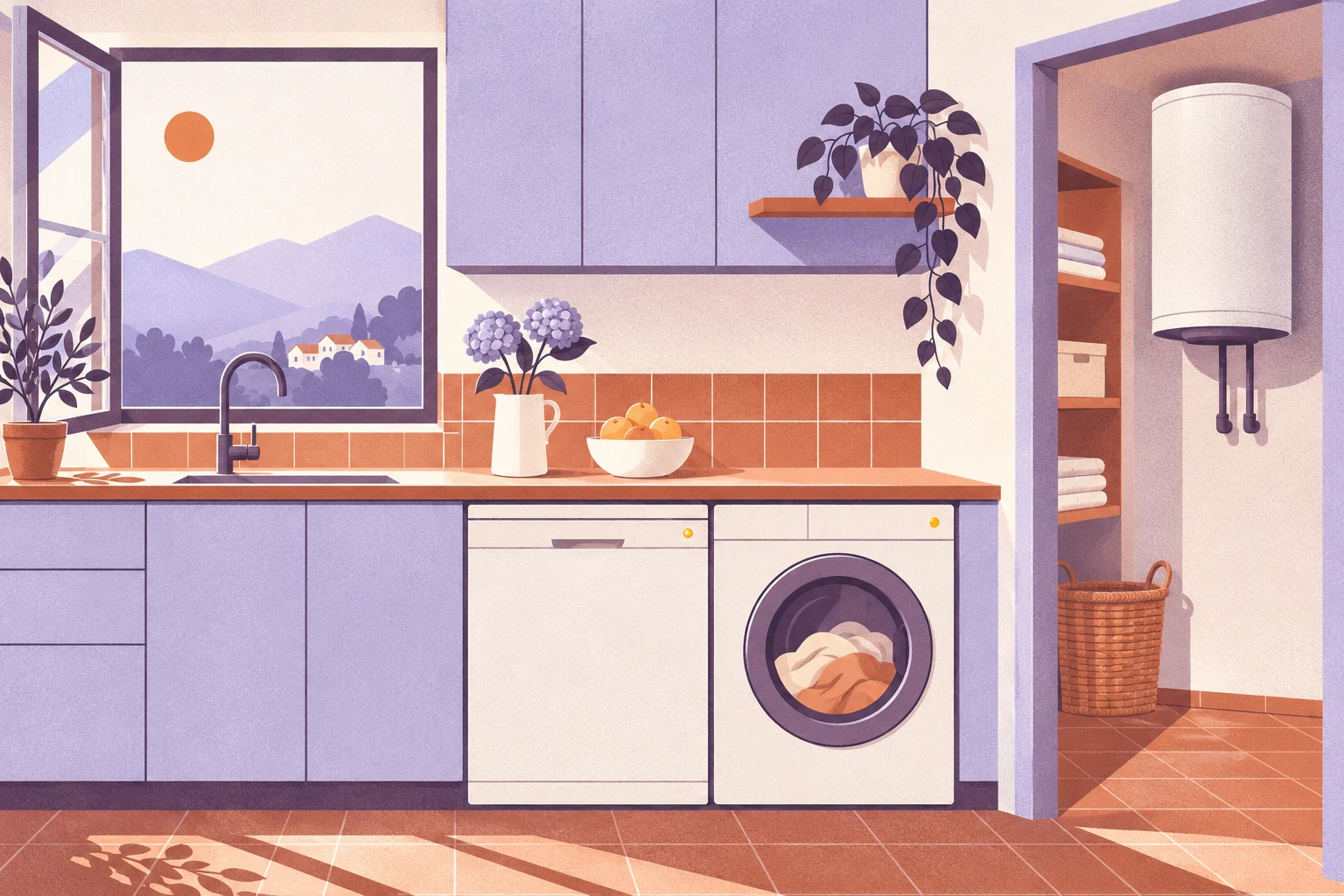
- It moves the big consumers. The boiler, the washing machine, the dishwasher and an electric car can run when the sun shines, not at night.
- It works with your heating. With a heat pump, a little extra warmth at midday can use the surplus. The smart heating post explains why that needs care.
What about a battery?
A battery stores the midday surplus for the evening and raises your own use. In 2025 the median installed price in Switzerland was about CHF 690 per kWh for batteries under 10 kWh and about CHF 500 per kWh for 20 to 30 kWh, before VAT (EnergieSchweiz price study). That is roughly CHF 4,300 for 5 kWh and CHF 6,400 for 10 kWh. Prices fell about 19% in one year, and in 2016/17 they were still CHF 1,000 to 2,500 per kWh (Swissolar). Cells keep getting cheaper worldwide: BloombergNEF counts about US$108 per kWh for a pack in 2025, against roughly US$1,470 in 2010, in today's money. But planning and installation are about 40% of the Swiss price, so expect gradual declines, not a collapse. On its own, a 10 kWh battery typically needs 15 years or more to pay for itself, less where a local grant applies, so it makes most sense with high evening use or an electric car. Ask the installer to calculate with your own consumption, not an average household.
If you rent or co-own
The roof is not yours alone to decide. As a tenant you need the landlord. In a co-owned building, the owners' association decides. That can take time, so clear it up first.
A small option is balcony solar, also called plug-in solar. It is generally allowed up to 600 W if you notify your grid operator before you start. That is the company on your electricity bill that runs the local grid, not a separate energy supplier. Ask your landlord or the owners' association before you mount anything on the railing or the façade. EKZ pays a flat CHF 27 a year for plug-in systems up to 600 W. It is only a small share of a household's use, but it is a way in, and I'm writing a separate post about balcony solar for 18 November. I wrote about what renters can do without asking in the renters post.
Honest limits
- Winter. Most of the power comes in summer, while heating is needed in winter. Solar will not cover your heat pump in January.
- Averages are averages. Roof direction, shading and snow change the yield a lot.
- The rules keep moving. Feed-in payment changes with the market. A calculation that depends on exports is the weakest one.
- No percentage. I won't tell you that you will save "up to 40%". I don't know your roof or your habits.
How I'd start
- Collect your last 12 months of electricity use from your bills or your utility's portal.
- Find out who decides about the roof: the landlord or the owners.
- Check what your utility pays from 2027 and whether it needs a smart meter.
- Ask three installers for a quote with a calculation based on your own consumption, and ask about a local interface for the inverter.
- Think about the heat pump or the car before the battery. They raise your own use more cheaply.
In a Konihaus™ home, the energy dashboard in the Konihaus™ app brings production and use together, and the automations that move the washing machine or the boiler to midday run locally. If you don't want to miss the next posts, sign up for the Konihaus™ Blog newsletter below.
Thinking about solar and want to use more of it yourself? Talk to Koni. The first conversation is free, with no obligation.