energy
Balcony Solar in Switzerland: What Is Allowed and What It Gives
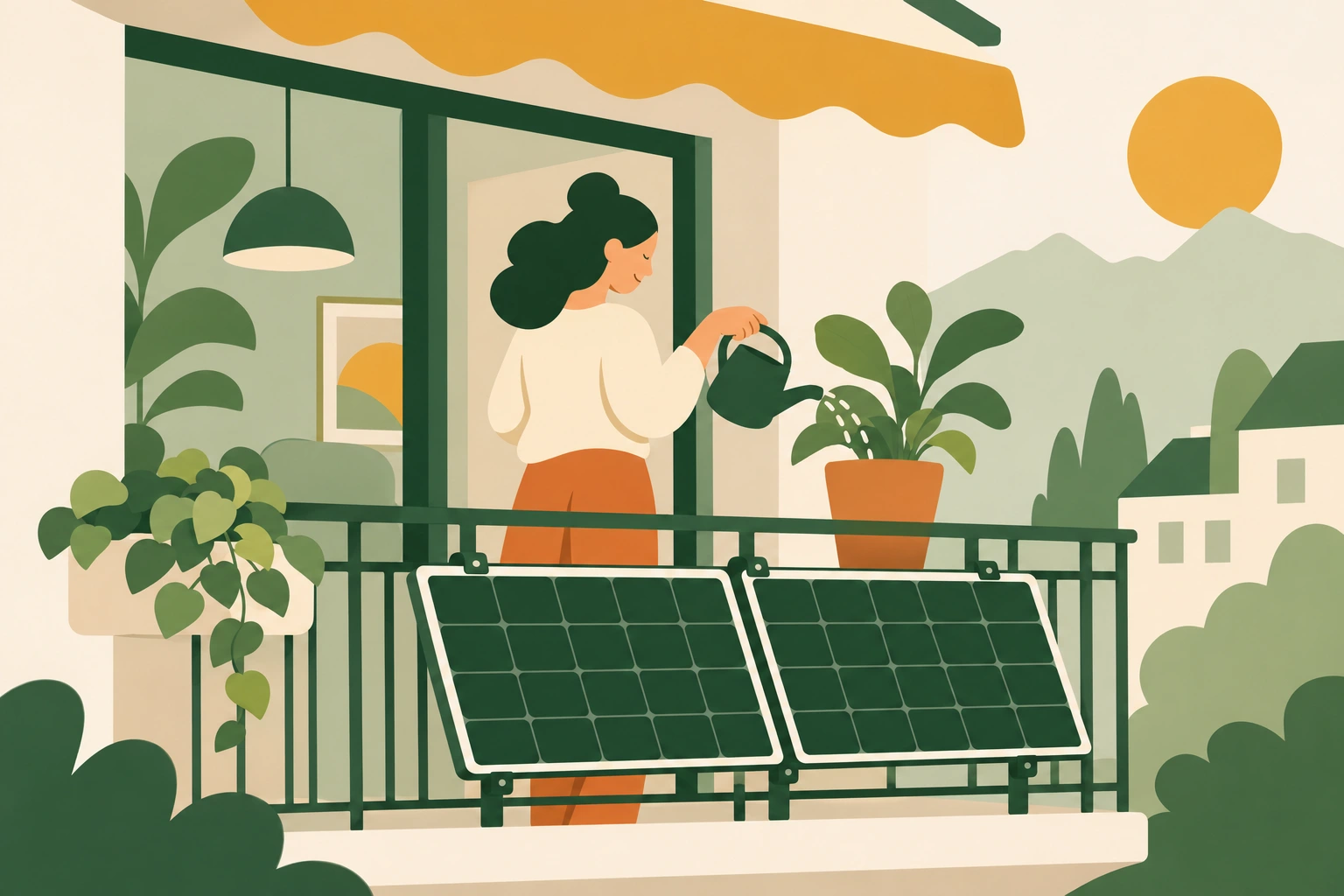
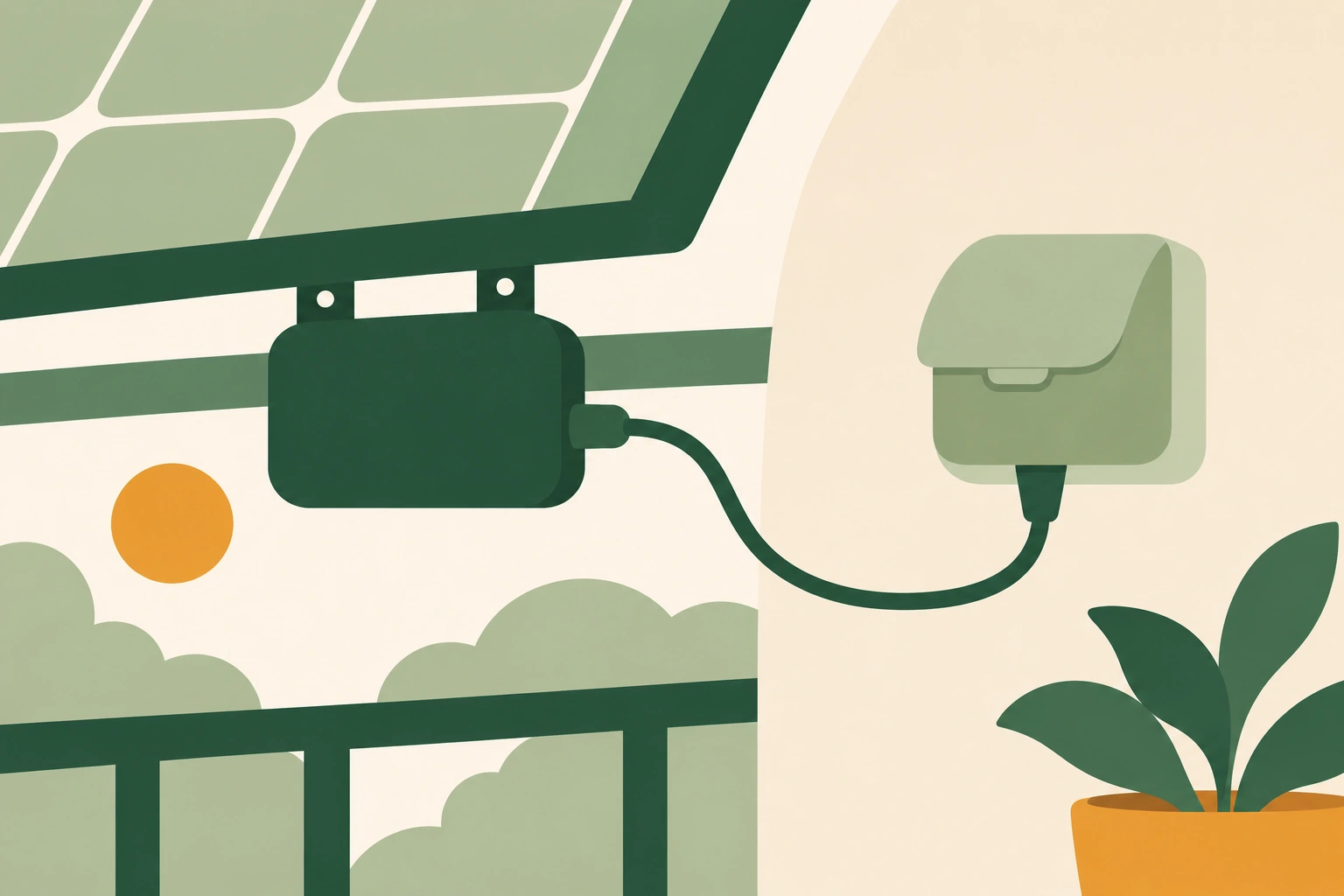
· KoniIf you rent, or live in a co-owned building, the roof is not yours to decide. But you may have a balcony. Balcony solar, also called plug-in solar, is a small set of panels with a micro-inverter that you plug into a socket outdoors. In the post on whether solar is worth it I promised to look at it separately. Here it is: what is allowed, who has to agree, and what you really get.
What is allowed
In Switzerland, small plug-in systems up to 600 watts need no building permit and no electrician for the plug-in itself. These are the rules that matter:
- 600 watts, measured at the inverter. The limit is the AC output of the micro-inverter, not the panels. Panels with more power on a 600 W inverter are fine. A bigger inverter that is limited to 600 W by software is not accepted by the federal electrical inspectorate (ESTI), so be careful with sets from abroad, where 800 W is common.
- You must notify the grid operator before you switch it on. Most operators have a short form. Many sets come with a manufacturer's notification form.
- One set per flat. The rule is one plug-in system per connection.
- A protective device is required. The set needs protection against fault currents, either a special plug or cable, or one built into the inverter, and a declaration of conformity. Check that the shop page says so.
- A normal plug in an outdoor socket. If you don't have one, or the wiring needs changing, that is a job for an electrician.
These rules come from utility guidance and press reports, and they can change. Check with your own grid operator before you buy.
Who has to agree
The law allows the set. Your landlord may still have a say. Under tenancy law, changes to a rented flat need the landlord's written consent, as I wrote in the renters post. Panels on a railing or a façade are visible and fixed to the building, so ask in writing first, and attach a photo of what you plan.
In a co-owned building, the façade and railings often belong to the community. Ask the administration. A set that stands on the floor of your balcony is the easiest case, but it is still worth a question.
What it costs, and what it gives
- Cost: a complete set (panels, micro-inverter, cables, fixing) costs roughly CHF 600 to 1,800, according to a Swiss consumer report. Cheaper sets usually have less power.
- Yield: about 10% of the electricity of a household, according to the figure Energie Schweiz gives. That is roughly CHF 120 a year, if you use all of it yourself.
- Payback: Energie Schweiz quotes 7 to 9 years. My own check: a CHF 900 set that saves CHF 120 a year takes 7 to 8 years. A CHF 1,800 set takes 15.
- Subsidy: the federal one-off payment starts at 2 kWp, so as far as I know a balcony set gets none.
- If you feed in, you earn very little: about 6 to 9 centimes per kWh, according to the same report. At EKZ, for example, plug-in sets up to 600 W get a flat CHF 27 a year. So the money is in using the power yourself, as in the solar post.
So balcony solar is not a path to a free bill. It is a modest, fairly cheap way to cover a small slice of what you use, and to learn how solar behaves in your home.
Where a smart home helps
A balcony set makes its power at noon, and it is small, so little of it is left over. The way to benefit is to use the power while it is produced.
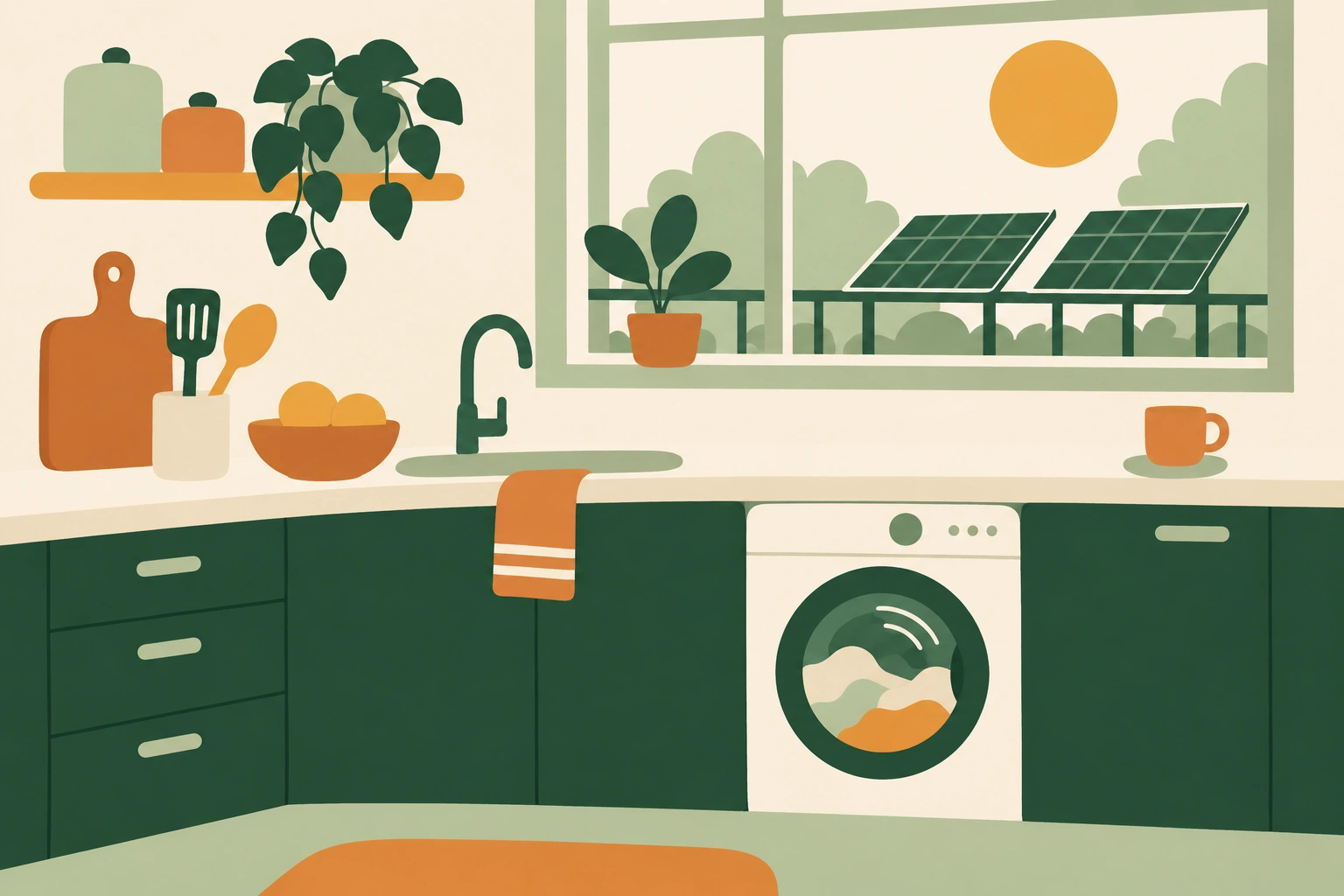
- Run the washing machine or the dishwasher at midday. A smart plug with a power meter on the appliance, not on the inverter, shows what it uses.
- See what the set produces. Many micro-inverters have an app. Ask before you buy whether the inverter also has a local interface, so your smart home can read it without the cloud.
- Know your base load. The fridge, the router and the stand-by devices run all day. A 600 W set covers a good part of that on a sunny day.
Honest limits
- It is small. It will not run an oven, and it does nothing in the evening.
- Orientation and shade matter a lot. A south-facing balcony is best. A shaded north balcony makes a poor investment.
- It must be fixed securely. Wind and a heavy panel are a safety question for the people below. Use the mounting that comes with the set.
- Rules change. Feed-in pay and notification forms differ between operators, and they keep moving.
- No percentage. I won't tell you that it saves "up to 20%". I don't know your balcony.
How I'd start
- Ask your landlord or the administration in writing, with a photo of the planned set.
- Check your balcony: direction, shade, and where the socket is.
- Choose a set with a 600 W inverter, a declaration of conformity and the protective device. Be careful with imports.
- Notify your grid operator before you switch it on.
- Move one appliance to midday and see what happens.
In a Konihaus™ home, the energy dashboard in the Konihaus app can show what runs at midday, and automations can start the washing machine when the sun is out. They run locally. If you don't want to miss the next posts, sign up for the Konihaus Blog newsletter below.
Curious about plug-in solar for your balcony? Talk to Koni. The first conversation is free, with no obligation.