guide
Christmas Lights on Autopilot, and Lights That Say Someone Is Home
· KoniThe first Advent is this Sunday, 29 November. In many homes that is the day the light chains come out of the box, the window gets its stars and somebody climbs a ladder. By the second week, nobody wants to go round the house at five o'clock switching everything on, or at midnight checking it is off.
This is a small post about doing that once and then forgetting it, with one important exception.
What I would automate
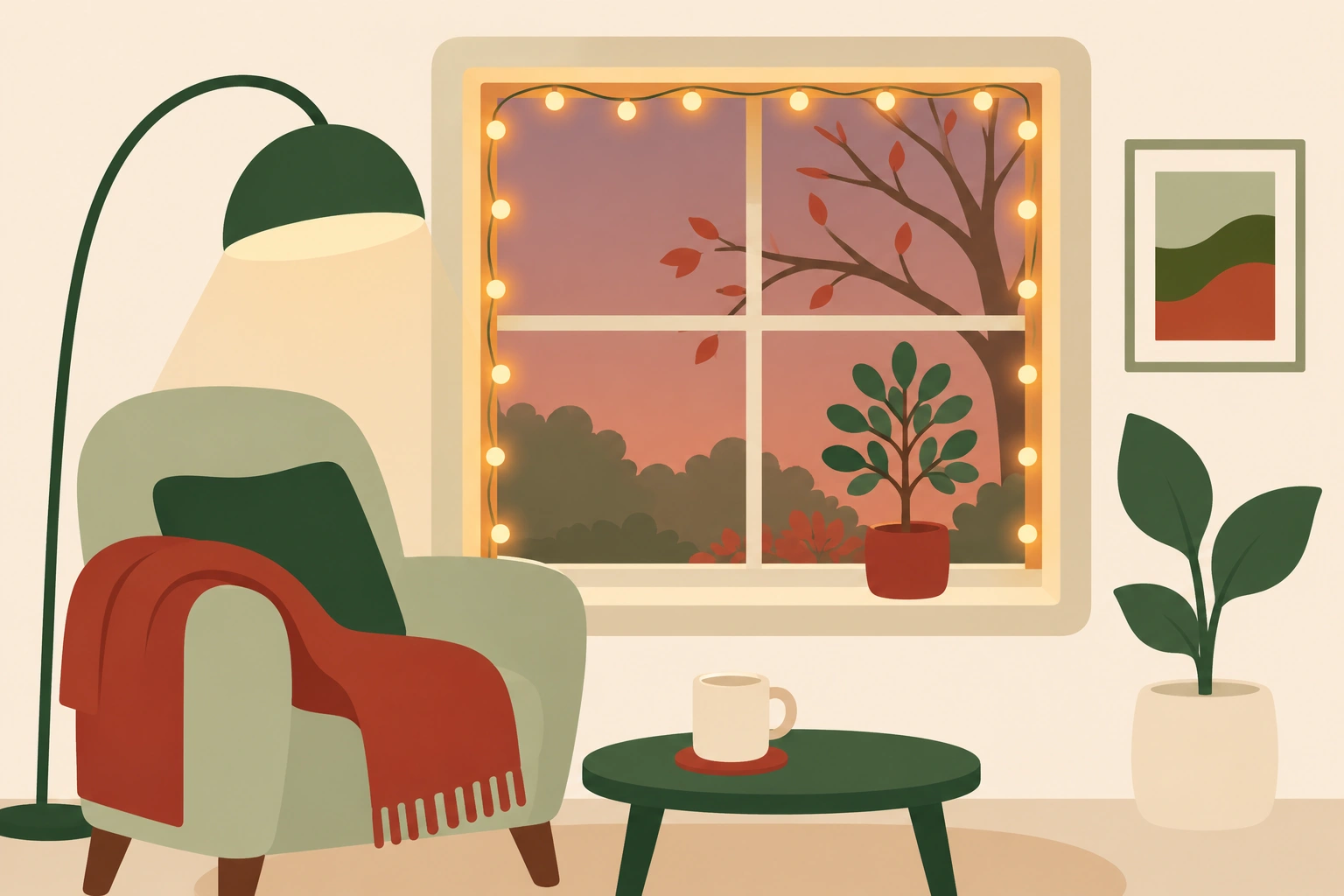
- The light chains in the windows and on the balcony: on at dusk, off at bedtime. "At dusk" follows the real daylight, so you don't have to change the time as the evenings get darker. A fixed time works too, but then you adjust it by hand.
- The tree, if it has an electric light chain: on in the evening, off when the last person goes to bed.
- A "Christmas" scene: one tap that switches on tree, window lights and the lamp in the corner together, for when guests arrive.
Everything runs on ordinary parts from the series: a smart plug between the socket and a light chain, or smart lights in the lamps you already have. The hub in the house does the timing, so it still works when the internet doesn't.
What I would not put on a timer: candles
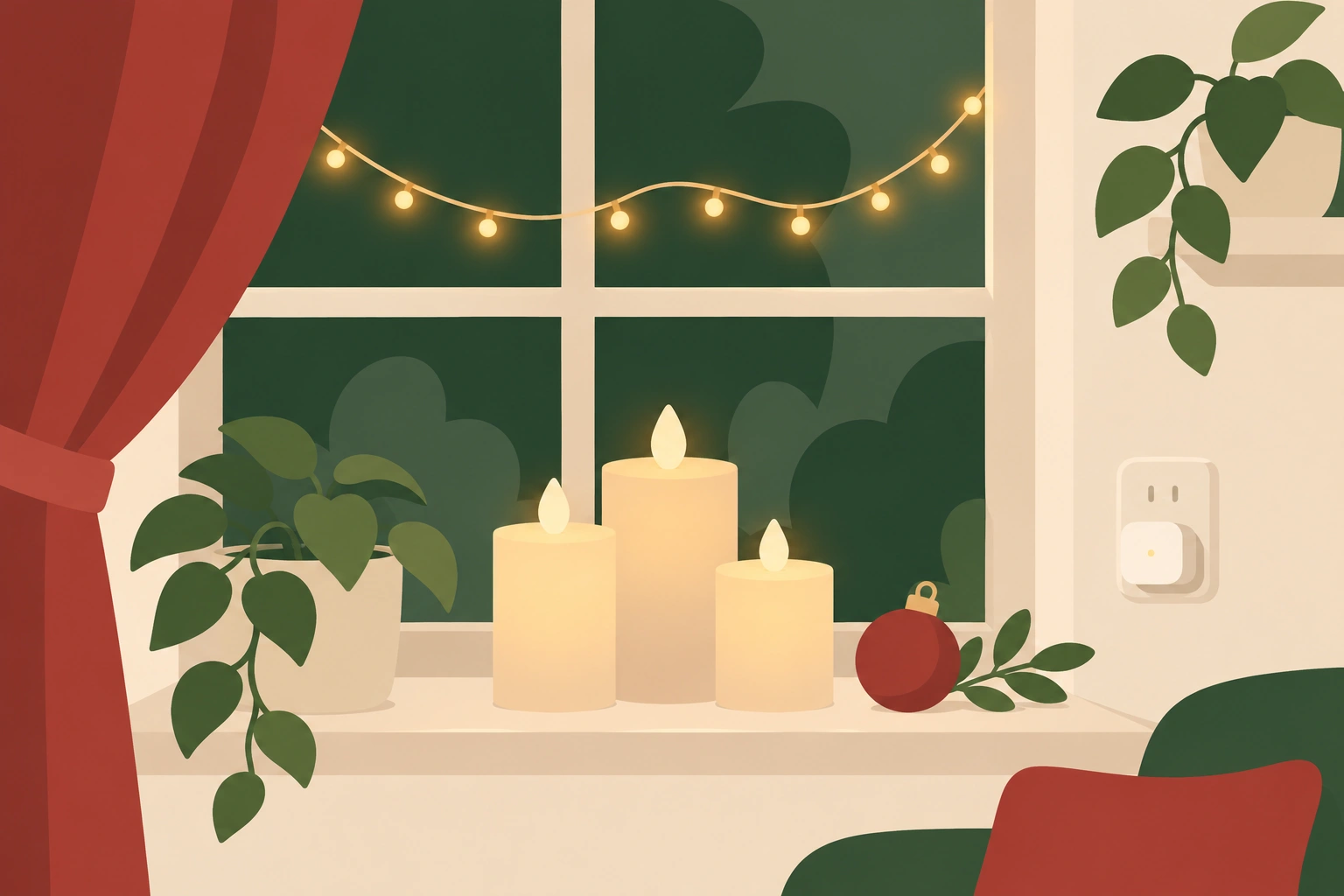
The Swiss Council for Accident Prevention (BFU) is clear about the basics: never leave burning candles unattended, don't let them burn down completely, and don't light candles on dry Advent wreaths or trees any more. It recommends LED candles and LED light chains instead of wax candles, because they are safer.
(Source: BFU, Sicherheitstipp Advent.)
A real flame cannot be made smart, and I would not try. A plug can switch the power to a light chain, but it cannot tell whether a candle has burnt down. So the rule is simple: the timer is for LED, and wax candles stay with a person in the room. If you would like the candle look, LED candles on a plug are exactly the point.
The BFU page says nothing about timers, so the timer advice here is mine, not theirs. What I add: check the rated load on the plug before you connect a long light chain, and keep the chain's own instructions in mind.
Lights on while you're away
The same trick helps in another way. Everyone knows the house that is dark every evening for a week. A light that comes on at dusk and goes off at a sensible hour makes an empty house look a little less empty.
A few things I'd do:
- Not the same minute every night. Let the time vary a little, and use more than one lamp, in more than one room.
- Lights that make sense. The living room in the evening, a bedroom a bit later, not everything at once.
- Blinds too, if you have them (see smart blinds): half open in the morning, closed in the evening, like a person would do it.
- Don't announce it. A message on social media saying you're away is the opposite of all this.
- Curtains closed at night, valuables out of sight, and a neighbour who collects the post, so the house does not look unattended.
- No power cable through a gap in a window for outdoor lights. Use battery or solar lights, or a proper outdoor socket.
Swiss crime prevention gives the same advice. The Swiss Crime Prevention service (SKP) recommends timers especially in winter, when it gets dark early, and for longer absences. It says to switch several rooms, not just one, with switching times that are irregular and change automatically, so that somebody walking past in the evening cannot tell whether anyone is home (source: SKP, "Täuschen Sie Ihre Anwesenheit vor"). The Zurich cantonal police page (5 October 2026) says to leave a light on, and the City of Zurich suggests an LED light on a timer so the flat looks lived in (sources: Kantonspolizei Zürich, Stadt Zürich). The brochure "Gegen Einbruch kann man sich schützen" (Sicheres Wohnen Schweiz, March 2026) says lighting can have a deterrent effect, that the entrance and the path to it should be well lit, and that this can be controlled by motion sensors. It also says that lighting never replaces mechanical and electrical security: windows and doors locked, even when you only pop out. It adds that the mailbox should be emptied daily, or by someone else when you're away. The tips on cables through windows and on not posting about your holiday come from two UK sources, a security-information site (Immobilise, undated) and a locksmith's blog (Halls Locksmiths, 2021). The Swiss pages say lighting can deter, they do not give figures, and so I make no promise. A light costs little and it is one of the milder measures that come before a camera (see cameras and data protection). A motion light at the door belongs here as well (see sensors).
Honest limits
- LED chains vary. Check the rated load on the plug and the information on the chain. If a chain is marked for indoor use, keep it indoors.
- A timer is not supervision. If a light chain gets hot, smells, or flickers, switch it off at the wall and replace it. No automation checks that for you.
- A lit house is not a guarantee. Lights while you're away are one small thing among others: windows and doors locked (not tilted), a neighbour who watches, an emptied mailbox. The brochure says plainly that lighting does not replace mechanical security.
- Keep it local. The same brochure warns that smart home devices that depend on the internet can be an entry point for outsiders if the network is not properly secured, and recommends a secure VPN and encryption where systems must talk to each other. One more reason for lights that run on the hub in the house.
- Outdoor power: an outdoor socket and outdoor-rated plugs are a different question. Use equipment made for outdoors, and when in doubt ask an electrician.
How I'd start
- Use LED chains and keep wax candles for evenings when someone is in the room.
- One plug per group of lights, with a rated load higher than the chains together.
- Set "on at dusk, off at bedtime" and look at it for a week.
- For holidays, add one or two lamps with times that vary a little.
- Tell a neighbour you're away, instead of telling the internet.
In a Konihaus home the Advent lights follow dusk, the family's bedtime and, when you're away, a pattern that looks like living, all run by the hub in the house. And yes, the candles stay yours.
Want your lights to do the evening rounds for you? Talk to Koni. The first conversation is free, with no obligation.