privacy
Security Cameras at Home: What Swiss Data Protection Asks of You
· KoniEvery other device in this series looks at your home. A camera looks at people: you, your family, the neighbour on the path, the person delivering a parcel. That is why it gets its own post, and why my starting question is not "which camera?" but "do I need one at all?"
This post continues the series on the parts of a smart home, after smart lights, blinds, sensors, heating, locks and smoke, CO and gas alarms. I am not a lawyer, and this post is not legal advice. It is built on the public guidance of the Swiss Federal Data Protection and Information Commissioner (EDÖB) on private video surveillance and on a news report about a Federal Supreme Court case, in plain words, plus how I apply it myself. If you have a specific question about your own situation, ask a lawyer.
First question: do you need a camera?
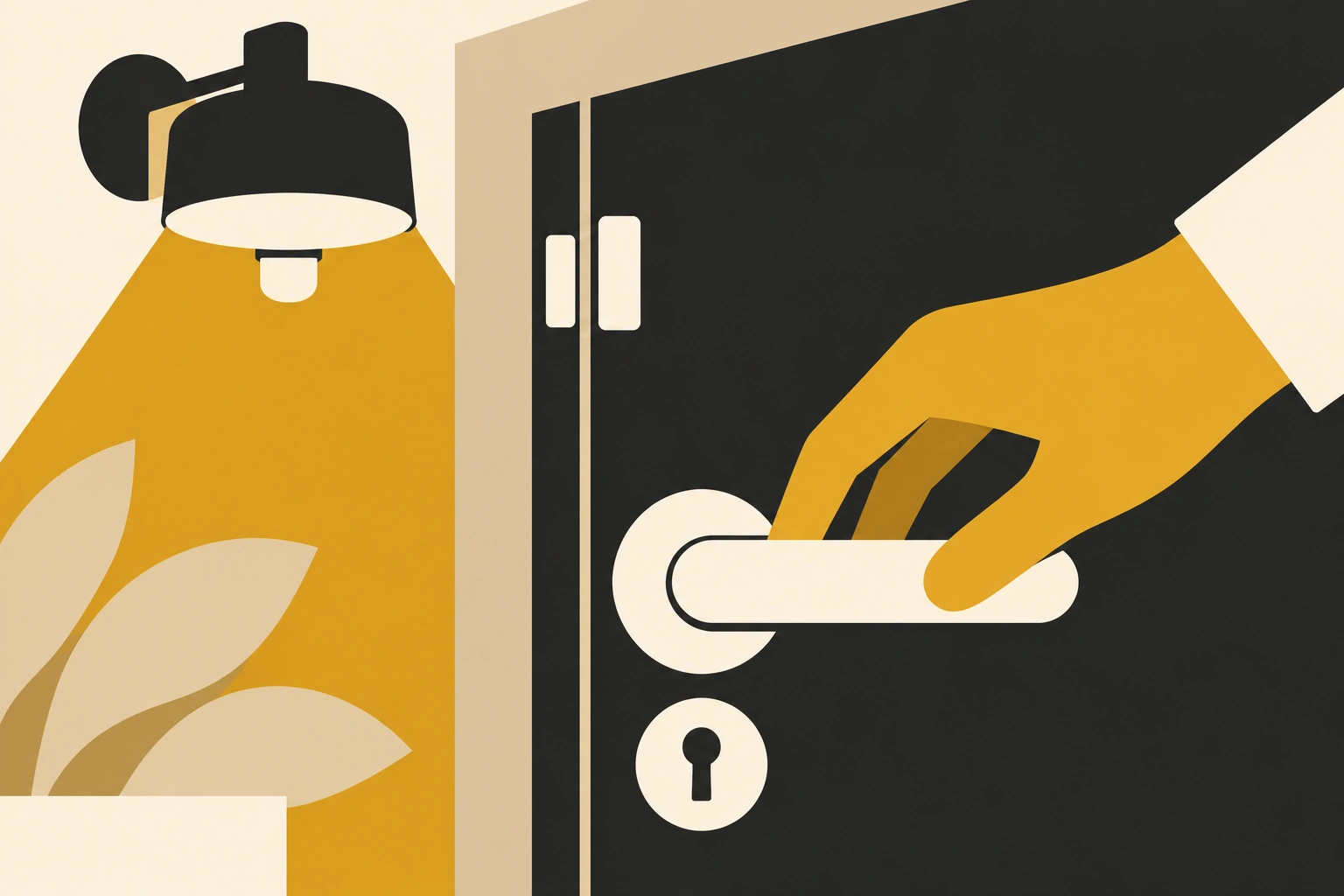
The commissioner says surveillance needs a justification, such as protecting people or property, and that it has to be proportionate. Milder measures come first: a stronger lock, a reinforced door, an alarm, or a light that switches on with movement.
That is how I think about it too. A door contact, a motion light and a good lock (see sensors and locks) solve most worries without filming anybody. A camera is what you add when those are not enough, not the first thing you buy.
What you may film
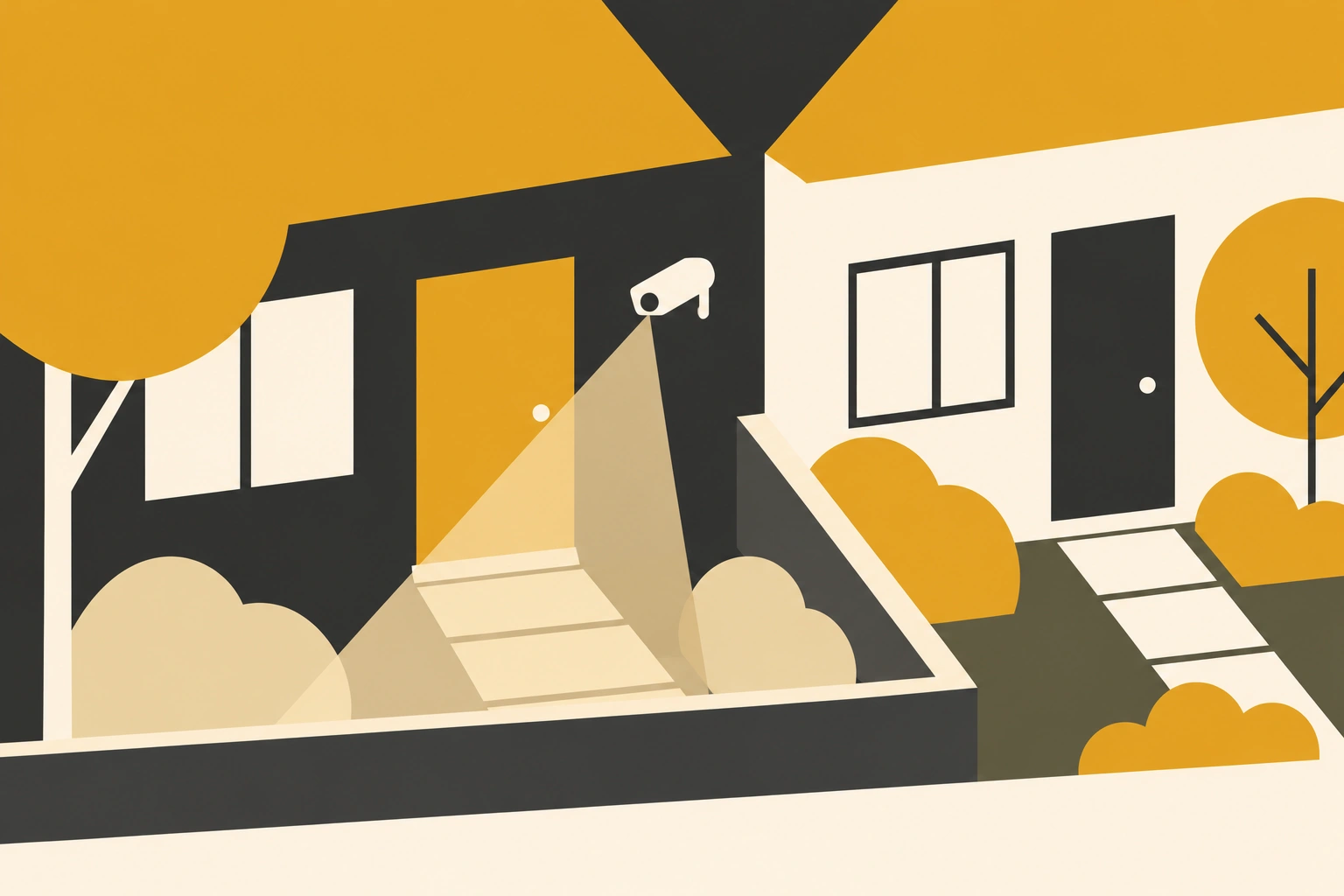
Your own property, and only that. Neighbouring land and public space, such as the pavement, must not be captured. If the angle cannot be limited any other way, the commissioner points out that a physical barrier can restrict what the camera sees.
Two practical points from my side:
- Set the view by looking at the live image, not by guessing. Check that no neighbour's garden, window or door and no part of the pavement is in the picture.
- Even your own ground can catch someone. A camera aimed at your land can still record a person on a path they use. The commissioner says that if the camera cannot be moved, the neighbour must be consulted first. I would talk to them before I mount it.
A video doorbell is not discussed separately on the commissioner's pages. I apply the same test: the picture should show your door and the step in front of it, not the street and not your neighbour's entrance.
Tell people before they walk in
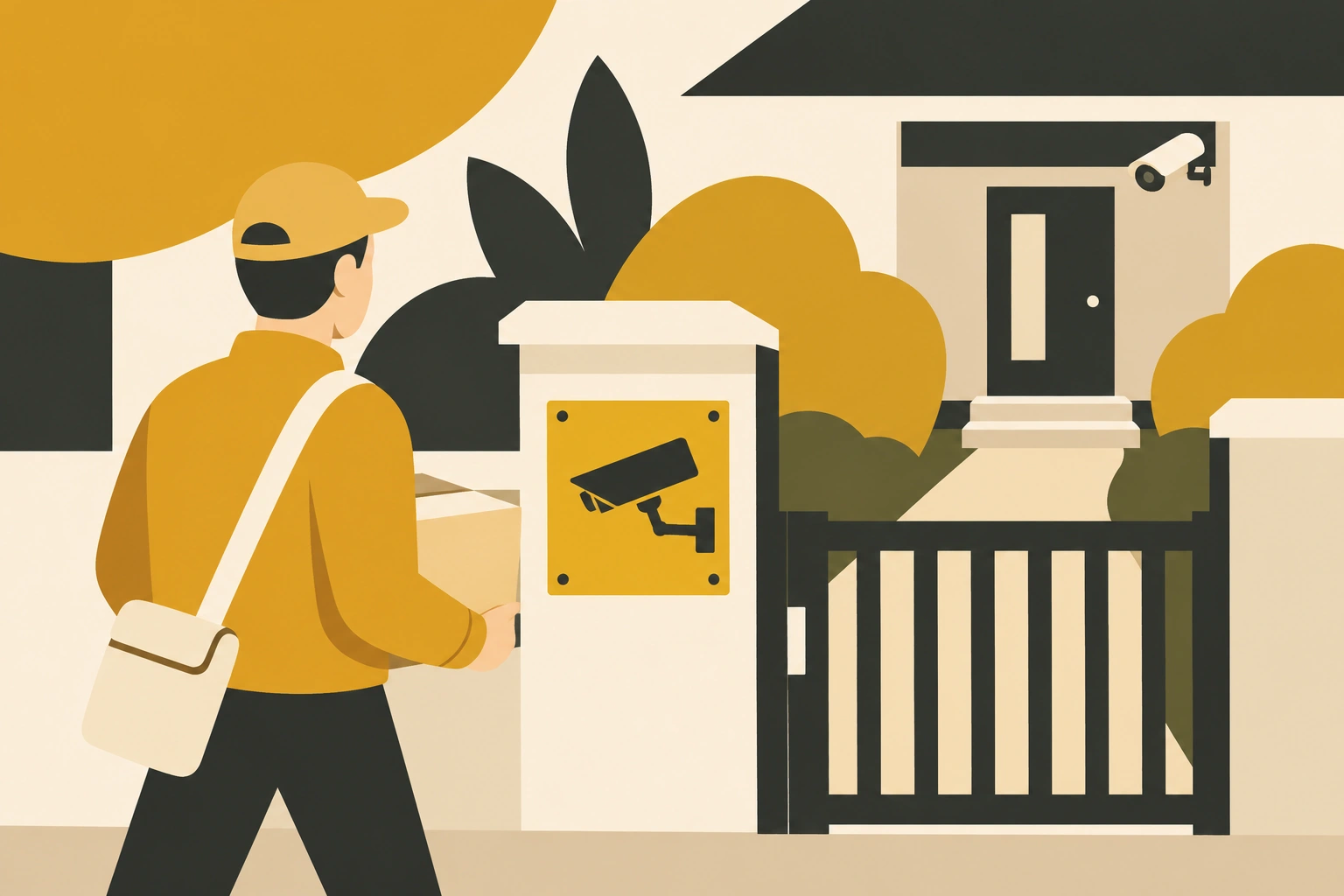
Surveillance has to be recognisable, and people must be informed before they enter the camera's field of view. That means a clearly visible sign where they enter. If it is not obvious who runs the camera, the sign should say who is responsible and where people can ask questions.
Footage: keep little, show to few
- Keep it short. Footage may be kept only as long as needed for its purpose, usually about 24 hours.
- Don't watch without a reason. If the camera is there to deal with an event, such as a break-in, nobody looks at the recordings without an occasion, and footage that was never needed gets deleted.
- Few people, no public screens. Limit who can see the live image and the recordings.
- Never publish it to name or shame someone. Publishing footage needs the consent of the people shown, and footage of a crime goes to the police.
In smart home terms: set the recording to overwrite after about a day, keep it on a device in your home rather than in an account at the manufacturer, and use a camera that works without that account. The server shutdowns showed what happens when a device depends on somebody else's cloud, and with a camera the stakes are higher: it is your footage of other people.
Inside the home: I say no
Criminal law treats image recordings of a person in a private space as an offence (Art. 179quater of the Criminal Code). The commissioner notes that this is read narrowly, with bedrooms and bathrooms as examples. Recording private conversations is also prohibited, and the commissioner advises switching off the microphone of any camera that has one.
My rule goes further than the law: no cameras inside the home. Everything in the posts on hallways at night and dementia at home works with simple sensors that report movement or an open door, with no picture. A home should not feel watched.
Shared areas and rentals
If a camera would watch a space several people use, such as a garage or a laundry room, the commissioner says those people must be consulted beforehand. In a rented flat that also means the stairwell and the entrance are not yours to film; my post on smart homes for renters says the same.
The Federal Supreme Court dealt with this in a case from an apartment building in Basel-Landschaft. The landlords had installed twelve cameras, and a tenant objected. The court ordered three removed, including one covering the entrance near his flat. It did not ban cameras in residential buildings and accepted that protection against burglary is a legitimate aim. Each case is judged on its own. (Source: SRF report on the ruling.)
Holiday rentals are a separate matter. Airbnb has banned indoor security cameras since 30 April 2024. Outdoor cameras are allowed if you disclose them and their location, and they must not cover areas where people expect more privacy, such as a sauna. That is a platform rule, not data protection law, but if you host, it decides first.
If a neighbour complains
Talk first. The neighbour may ask whether there are recordings of them, why the camera is there, how long footage is kept and who can see it. They can also ask for deletion and for the angle to be changed. If that does not settle it, the next step is a conciliation request at the local court, and then a civil claim under Art. 28 of the Civil Code. Data protection disputes carry no court fees, but each side pays its own lawyer.
My test for a setup: if I cannot explain in a minute why the camera is there and what it sees, I change it.
My own setup
I have cameras at home myself: four around the house. I put them in when we moved in, because it was easier to prepare them during the renovation. They are wired and connected to a recorder in the house. I made sure each one covers only my own property and records only when there is movement. My plot has a few areas that are quite hidden from the house, which is where they help most.
About six months ago someone tried to break into a neighbour's house. It stayed an attempt: nothing was taken, a door was damaged. Since then most of our neighbours have put up cameras too. I can't prove that this keeps burglars away, but my impression is that a street where many houses have cameras is less inviting than one where few do.
Honest limits
- This is general orientation, not legal advice. I rely on the commissioner's published guidance and one news report, not on the statutes themselves, and a lawyer has not reviewed this post. The guidance is not law, and courts decide each case on its facts. For a dispute with a neighbour, a landlord or a tenant, or for any doubt about your own setup, get legal advice.
- Not covered here: house rules and landlord consent, municipal rules, and cameras at a workplace, where labour law applies as well.
- Dummy cameras are not covered by the pages I rely on, so I make no claim about them.
- A camera records, it does not protect. A lock, a light and a good door do the protecting.
How I'd start
- Try the milder measures first: lock, door contact, motion light.
- Outdoors only, aimed at your own door or driveway. Check the live image for neighbours and pavement.
- Put up a visible sign where people enter the picture.
- Record locally, overwrite after about a day, microphone off, access only for those who need it.
- Tell the neighbours before you mount a camera near the boundary.
In a Konihaus home, outdoor cameras appear only where milder measures do not do the job, recordings stay on a device in the house, and there is no camera inside. If you don't want to miss the next posts in this series, sign up for the Konihaus Blog newsletter below.
Not sure where a camera could go without filming more than it should? Talk to Koni. The first conversation is free, with no obligation.