safety
Who's at the Door? Keeping an Older Couple Safe From Doorstep Scams
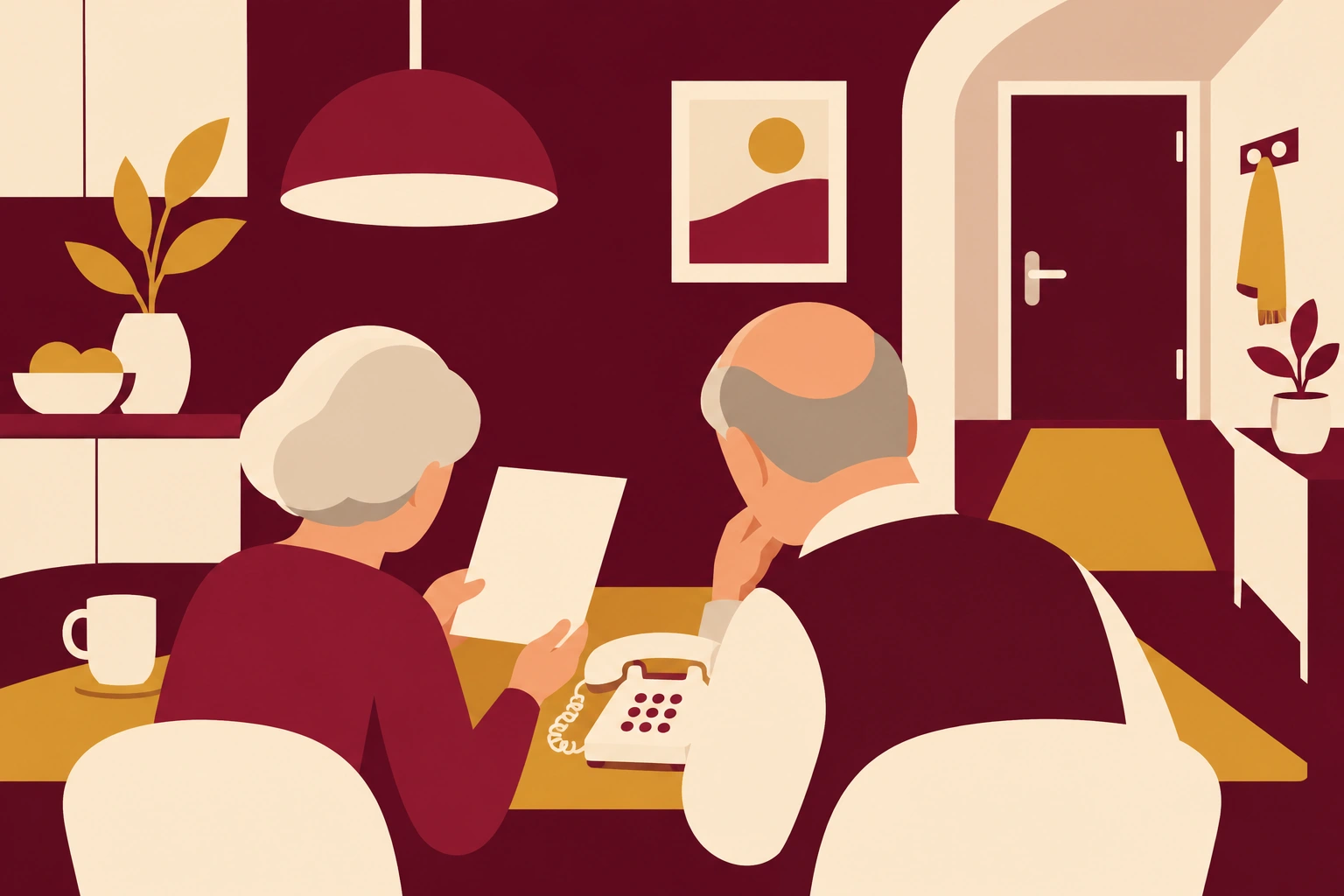
· KoniImagine an older couple, Margit and Franz. The bell rings on a weekday morning. A friendly man in work clothes says he was sent by "the company" and has noticed damage on the roof. He only needs a minute to show them. (Margit and Franz are an invented example, but the situation is not.)
Franz is polite. He opens the door. Everything that follows, the pressure, the offer, the signature, starts from that one polite moment.
What actually happens
On 21 July 2026 the Zurich cantonal police arrested a man in Hirzel. According to their press release he had visited two retired couples at their front doors, presented himself as the head of a renovation company and talked them into repair contracts worth tens of thousands of francs. He then raised the amounts by claiming he had found new damage, until one couple owed about 100,000 francs and the other nearly 90,000. The police say the work, if it was done at all, was far below the usual standard.
What stopped it was a son. He called the police when he saw strangers working at his parents' house and demanding money. (Source: Kantonspolizei Zürich, press release of 22 July 2026.)
That detail is the one I keep thinking about. Nobody was stupid in that story. The scheme worked because the couples were alone with it, at the door, with someone waiting for an answer.
What the police advise
The Zurich cantonal police warn that offenders pose as craftsmen, travelling salespeople or officials, and use trust and the wish to help to get into the home. If you feel someone is trying to deceive you, contact the police for advice; in an emergency call 117 (source: Kantonspolizei Zürich, forms of fraud).
For offers made at the door, the Hirzel press release gives four points: insist on a written offer, don't act under time pressure, read the offer carefully, and get a second offer from another provider.
None of that needs a smart home. All of it needs the one thing a doorstep scam takes away: time.
What a smart door can add
I do not think technology solves this. A person who can think calmly at the door is the protection. But a few small things make calm more likely:
- A door that stays closed unless you open it. A lock that locks itself when the door shuts (see the front door's three jobs) means nobody walks in behind a polite hello.
- A chime that tells the family. When the bell rings, or when the door opens at an unusual time, a simple message can go to a son or daughter. Not a picture, just "someone is at the door". That is the Hirzel detail: a family member who knows something is going on.
- A "not today" routine. One button by the door, or a tablet in the hall, that switches the porch light on and sends the message "Please call me". It gives the person at home something to do other than argue.
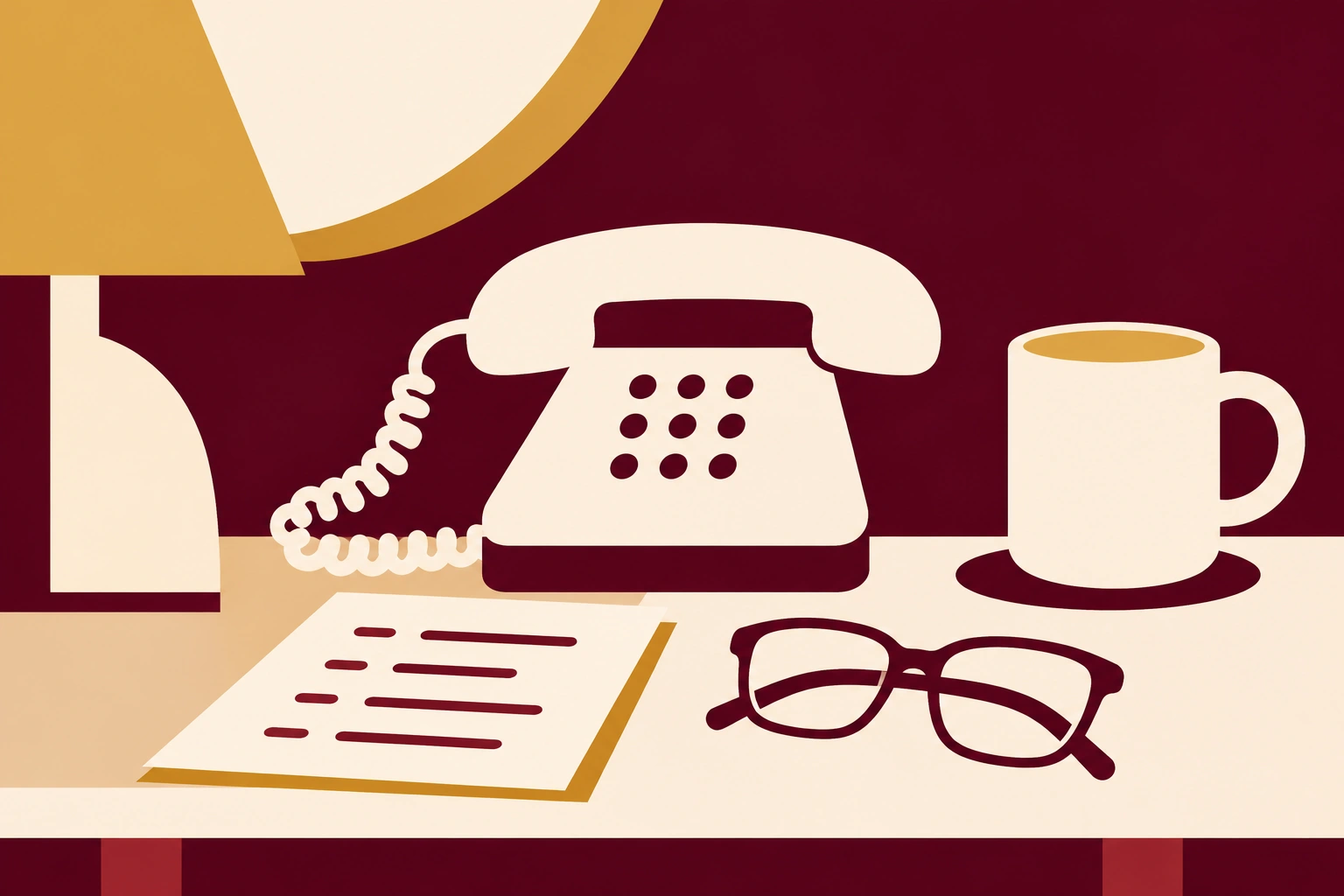
- A list by the phone. Plumber, roofer, chimney sweep, the number of the son, and 117. This is paper, and it works.
I deliberately leave out cloud cameras. A doorbell that sends video to a manufacturer's server solves one worry and creates another (see the post on cameras), and the people who most need calm at the door are the ones for whom an app full of notifications is one more thing to manage. For the same reason, anything like this should be agreed with the person it is for, as I wrote in the post on dementia at home: help without surveillance.

Honest limits
- A lock does not stop a person who opens the door. It keeps strangers from coming in unasked. The decision to open is still theirs.
- I have not tested this with a scammer at the door. What I describe are ordinary parts used for a calmer doorstep, not a proven defence.
- The Hirzel case is one case. It shows how the scheme works, not how common it is.
- Renters: in a rented flat the lock and the doorbell belong to the landlord. See smart homes for renters for what you can do without changing the door.
- If someone is already inside or is demanding money, call 117.
How I'd start
- Talk about it first. One conversation at the kitchen table: "We don't decide anything at the door."
- Put the numbers by the phone: family, trusted tradespeople, 117.
- Make the door close itself, with a lock that locks automatically.
- Add a "someone is at the door" message to one family member, no picture.
- Agree a rule: written offer, a day to think, a second offer.
In a Konihaus home the door, the bell and the message to the family run locally, without a camera and without an account at a manufacturer. It is built around the person who lives there and the family who care about them.
Thinking about an older parent, or about yourselves? Talk to Koni. The first conversation is free, with no obligation.